

September 18
5 moments across history
Two German States Join the United Nations
On September 18, 1973, East Germany and West Germany were admitted simultaneously to the United Nations. Their membership affirmed both states’ international standing and expanded their participation in global diplomacy. The move reflected Cold War détente, West Germany’s Ostpolitik, and the 1972 Basic Treaty normalizing relations between the divided German states.
Two German States Join the United Nations
United States Air Force Established

United States Air Force Established

Year: 1947
On September 18, 1947, the United States Air Force became an independent military branch under the National Security Act of 1947, succeeding the Army Air Forces. The change gave air operations separate leadership and reflected the growing strategic importance of aviation, including long-range bombing and nuclear deterrence. It followed airpower’s major role in World War II and formed part of a broader reorganization of U.S. national security institutions at the start of the Cold War.
Mukden Incident

Mukden Incident

Year: 1931
On September 18, 1931, Japanese army officers staged an explosion on the South Manchuria Railway near Mukden, blamed Chinese forces, and used it to justify military action. The incident enabled Japan’s rapid occupation of Manchuria and the establishment of the puppet state of Manchukuo in 1932. It reflected Japanese imperial expansion, exposed the League of Nations’ inability to halt aggression, and helped set the stage for the wider Second Sino-Japanese War.
Booker T. Washington Delivers the Atlanta Exposition Address

Booker T. Washington Delivers the Atlanta Exposition Address
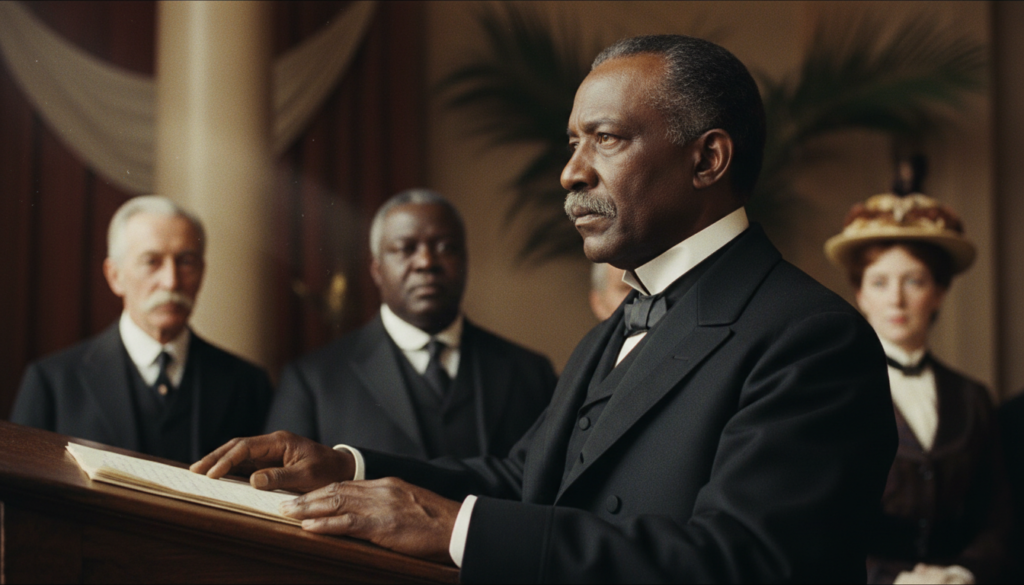
Year: 1895
On September 18, 1895, Booker T. Washington addressed the Cotton States and International Exposition in Atlanta, urging Black economic advancement through vocational education and cooperation with white Southerners. Known as the Atlanta Exposition Address or “Atlanta Compromise,” the speech brought Washington national prominence but drew criticism for appearing to accept segregation and limited civil rights. It reflected the post-Reconstruction South, when Jim Crow laws and racial violence constrained Black Americans and leaders debated how best to pursue equality.
Fugitive Slave Act Enacted

Fugitive Slave Act Enacted

Year: 1850
On September 18, 1850, President Millard Fillmore signed the Fugitive Slave Act, requiring the return of people who had escaped slavery. The law strengthened federal enforcement, denied accused fugitives key legal protections, and compelled officials and citizens in free states to assist in captures. Passed as part of the Compromise of 1850, it fueled Northern resistance and intensified sectional conflict over slavery before the Civil War.