![[e]Photo Stream](/logo.png)

August 7
5 moments across history
1998 U.S. Embassy Bombings
On August 7, 1998, coordinated truck bombs struck the U.S. embassies in Nairobi, Kenya, and Dar es Salaam, Tanzania, killing 224 people and injuring thousands. The al-Qaeda attacks devastated local communities, killed mostly Africans, and prompted U.S. missile strikes against targets in Afghanistan and Sudan. They marked al-Qaeda’s emergence as a major international threat and foreshadowed the broader campaign of transnational terrorism that culminated in the September 11 attacks.
1998 U.S. Embassy Bombings
Philippe Petit’s Twin Towers High-Wire Walk

Event 2

Year: 1974
On August 7, 1974, French high-wire artist Philippe Petit illegally walked between the Twin Towers of New York’s World Trade Center. His daring performance, made roughly 400 metres above the ground, became one of history’s most celebrated acts of aerial artistry. The feat occurred as the recently completed towers emerged as symbols of modern New York, decades before their destruction in the September 11 attacks.
Gulf of Tonkin Resolution Passed

Gulf of Tonkin Resolution Passed

Year: 1964
On August 7, 1964, Congress passed the Gulf of Tonkin Resolution after reported attacks on U.S. destroyers by North Vietnamese forces, though the second alleged attack was later disputed. It authorized President Lyndon B. Johnson to take “all necessary measures” in Southeast Asia, providing broad authority for a major escalation of U.S. military involvement in Vietnam. Passed amid Cold War efforts to contain communism, the resolution became a key legal basis for the Vietnam War’s expansion without a formal declaration of war.
Explorer 6 Launched

Explorer 6 Launched
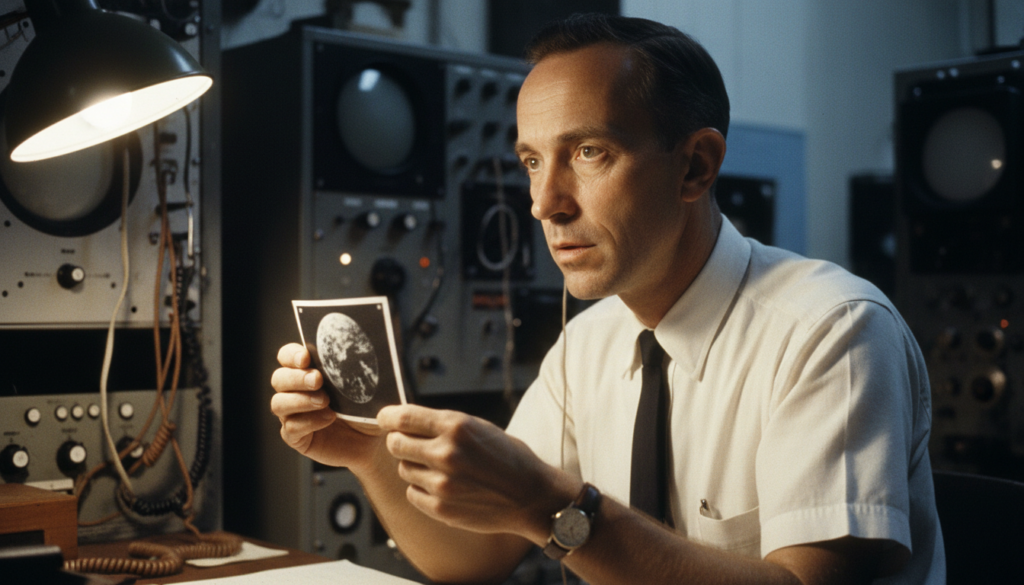
Year: 1959
On August 7, 1959, the United States launched Explorer 6 from Cape Canaveral to study Earth’s magnetic field, radiation, and atmosphere. The satellite later transmitted the first photograph of Earth from orbit, a crude image showing part of the planet and its cloud cover. The mission marked an early advance in satellite imaging during the Space Age and the intensifying U.S.–Soviet space race.
Kon-Tiki Expedition Reaches Raroia Atoll

Kon-Tiki Expedition Reaches Raroia Atoll

Year: 1947
On August 7, 1947, Thor Heyerdahl’s six-man Kon-Tiki expedition reached Raroia Atoll after sailing a balsa-wood raft from Peru across the Pacific. The voyage demonstrated that a raft built with pre-Columbian materials could make such a crossing, although it did not prove Heyerdahl’s theory that South Americans settled Polynesia. The expedition became a landmark of postwar exploration and experimental archaeology, while later archaeological, linguistic, and genetic evidence established that Polynesia was settled primarily from the west.