![[e]Photo Stream](/logo.png)

July 29
5 moments across history
Charles and Diana Marry. Prince Charles married Lady Diana Spencer at St Paul's Cathedral in a ceremony watched by a vast global audience
On July 29, 1981, Prince Charles, heir to the British throne, married Lady Diana Spencer at St Paul’s Cathedral in London. The ceremony drew a vast global television audience and made Diana one of the world’s most prominent public figures. The wedding reflected the monarchy’s international visibility in the mass-media era, although the couple later separated and divorced.
Charles and Diana Marry Prince Charles married Lady Diana Spencer at St Paul’s Cathedral in a ceremony watched by a vast global television audience. Year: 1981 Context: The wedding highlighted the British monarchy’s international visibility in the mass-media era; the couple later separated and divorced.
USS Forrestal Fire. A catastrophic fire aboard the aircraft carrier USS Forrestal off Vietnam killed 134 sailors and injured 161

USS Forrestal Fire An accidentally fired Zuni rocket ignited fuel and bombs aboard USS Forrestal, killing 134 sailors and injuring 161. Year: 1967 Context: The Vietnam War disaster severely damaged the carrier and led to major improvements in U.S. Navy firefighting, training, and weapons-handling safety.

Year: 1967
On July 29, 1967, an accidentally fired Zuni rocket struck an aircraft aboard USS Forrestal during Vietnam War operations, igniting fuel and bombs. The resulting explosions and fire killed 134 sailors, injured 161, and severely damaged the aircraft carrier. One of the U.S. Navy’s worst post–World War II disasters, it prompted major improvements in shipboard firefighting, training, and weapons-handling safety.
NASA Established. President Dwight D. Eisenhower signed the National Aeronautics and Space Act, creating the United States space agency
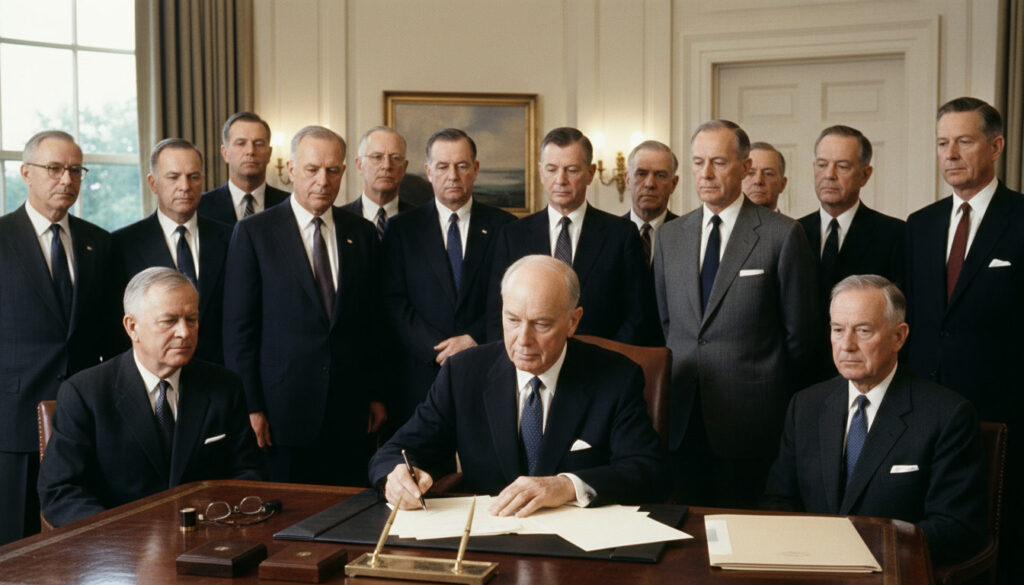
NASA Established President Dwight D. Eisenhower signed the National Aeronautics and Space Act, creating NASA as a civilian federal agency. Year: 1958 Context: Established in response to Sputnik, NASA absorbed the National Advisory Committee for Aeronautics and began operations on October 1, 1958, becoming central to the U.S. space program.
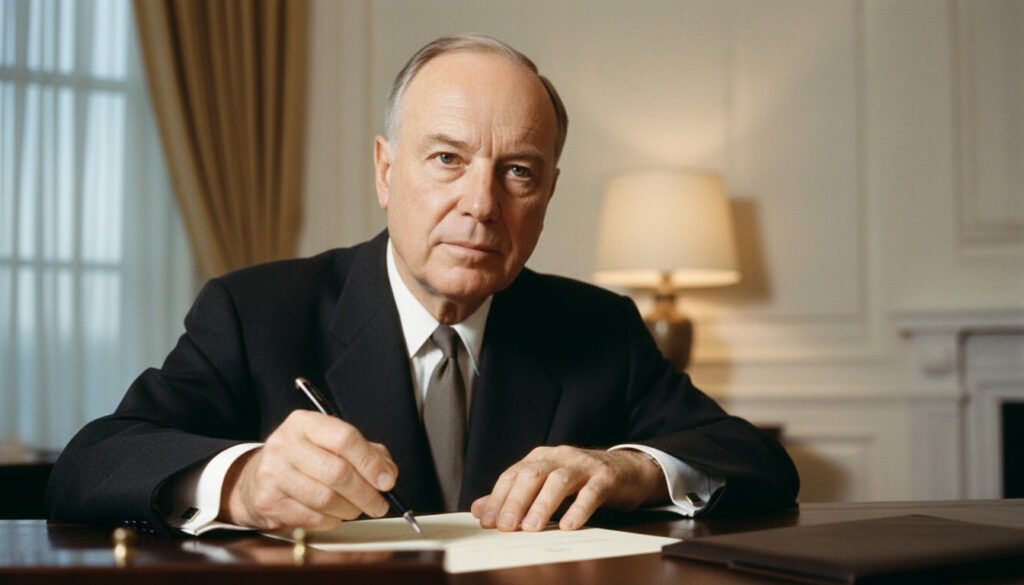
Year: 1958
On July 29, 1958, President Dwight D. Eisenhower signed the National Aeronautics and Space Act, establishing NASA as a civilian federal agency. NASA absorbed the National Advisory Committee for Aeronautics and coordinated U.S. research and exploration in space, formally beginning operations on October 1. The agency’s creation responded to the Soviet Union’s launch of Sputnik in 1957 and became central to U.S. efforts in the Cold War space race.
London Summer Olympics Open. King George VI opened the first Olympic Games held after the twelve-year interruption caused by World War II
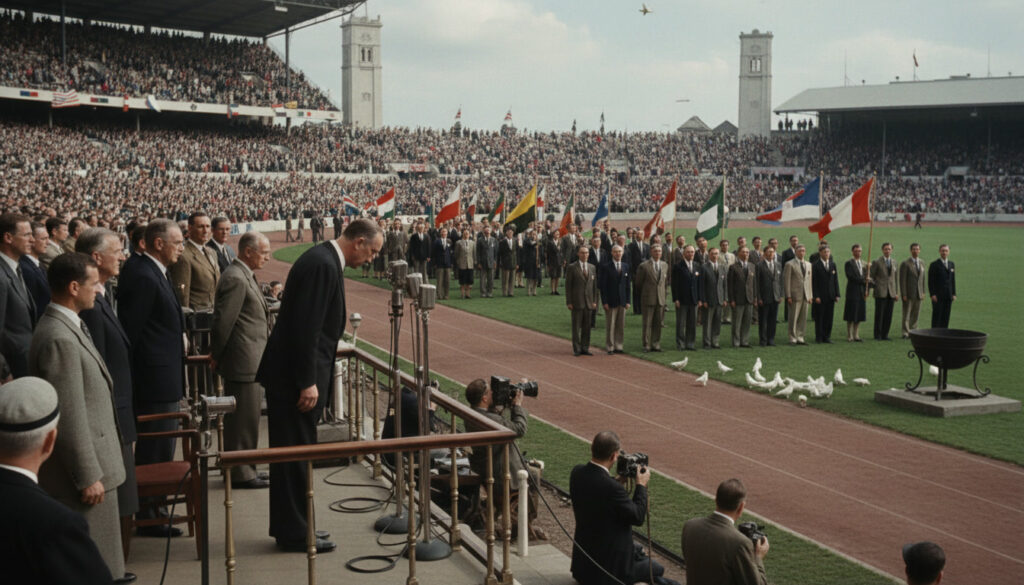
London Summer Olympics Open King George VI opened the first Olympic Games held after World War II at Wembley Stadium. Year: 1948 Context: Returning after a 12-year hiatus since Berlin 1936, the austerity-era Games symbolized renewed peaceful international cooperation.

Year: 1948
On July 29, 1948, King George VI opened the London Summer Olympics at Wembley Stadium. They were the first Olympic Games since Berlin 1936, restoring the international competition after a 12-year hiatus. Held amid postwar austerity, the Games marked a symbolic return to peaceful global cooperation after World War II.
Hitler Becomes Nazi Party Leader. Adolf Hitler assumed dictatorial leadership of the National Socialist German Workers' Party

Hitler Becomes Leader of the Nazi Party Adolf Hitler assumed dictatorial leadership of the Nazi Party, consolidating control over its ideology, propaganda, and organization. Year: 1921 Context: Amid post–World War I instability in Germany, Hitler’s appointment positioned him to reshape the party, which later exploited economic hardship, nationalism, antisemitism, and political unrest to establish a totalitarian dictatorship.

Year: 1921
On July 29, 1921, Adolf Hitler became leader of the National Socialist German Workers’ Party (Nazi Party), gaining broad dictatorial powers within it. His appointment mattered because it consolidated his control over the party and enabled him to shape its ideology, propaganda, and organization around his leadership. In the instability of post–World War I Germany, the Nazi movement later exploited economic hardship, nationalism, antisemitism, and political unrest to gain power and establish a totalitarian dictatorship.