![[e]Photo Stream](/logo.png)

July 1
5 moments across history
The Battle of Gettysburg Begins
On the morning of July 1, 1863, Confederate infantry marching toward Gettysburg in search of supplies encountered Union cavalry west of town. What began as a skirmish escalated into a full-scale battle as reinforcements poured in from both sides. By nightfall, Union forces had been pushed back through the streets of Gettysburg to Cemetery Hill, but they held the high ground — a position that would prove decisive over the next two days of fighting. The three-day battle produced over 50,000 casualties, making it the bloodiest engagement of the American Civil War and a turning point that halted the Confederacy's northern advance.
The Battle of Gettysburg Begins (1863)
Canada Becomes a Nation

Canada Becomes a Nation (1867)

Year: 1867
The British North America Act, passed by the British Parliament, took effect on July 1, 1867, uniting the Province of Canada (Ontario and Quebec), New Brunswick, and Nova Scotia into a single federation: the Dominion of Canada. Sir John A. Macdonald became the nation's first Prime Minister. The new country had its own parliament but remained part of the British Empire, with Queen Victoria as head of state. Over the following decades, other provinces and territories joined the Confederation. July 1 was originally called Dominion Day and was renamed Canada Day in 1982. Today it is celebrated with fireworks, concerts, and festivities from coast to coast.
The First Day of the Somme

The First Day of the Somme (1916)

Year: 1916
At 7:30 AM on July 1, 1916, after a week-long artillery bombardment, British forces along a 25-mile front in northern France climbed out of their trenches and advanced toward German lines. They expected little resistance — the bombardment was supposed to have destroyed the enemy. Instead, German machine gunners emerged from deep dugouts and cut them down. By sunset, 19,240 British soldiers were dead and 38,230 wounded or missing — the single bloodiest day in British military history. The Battle of the Somme would continue until November, producing over one million casualties and gaining only six miles of ground. It became the defining symbol of the horror and futility of trench warfare.
The Civil Rights Act Is Signed

The Civil Rights Act Is Signed (1964)
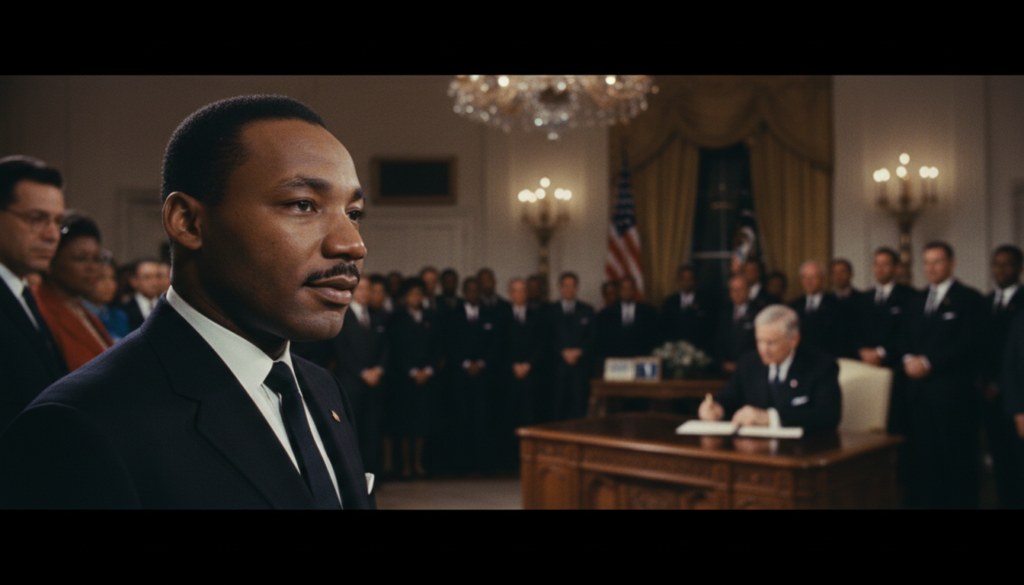
Year: 1964
The Civil Rights Act of 1964 was the most sweeping civil rights legislation since Reconstruction. Signed by President Lyndon B. Johnson in a nationally televised ceremony, the law outlawed discrimination based on race, color, religion, sex, or national origin. It ended segregation in public accommodations — hotels, restaurants, theaters — and banned employment discrimination. The act was the culmination of years of activism: the Montgomery bus boycott, the sit-ins, the Freedom Rides, the March on Washington, and the tireless leadership of Martin Luther King Jr. and countless others. Johnson, a Southern Democrat, used his political mastery to push the bill through Congress, knowing it would cost his party the South for a generation.
The First Tour de France Begins

The First Tour de France Begins (1903)

Year: 1903
On July 1, 1903, the first Tour de France began outside the Café au Réveil-Matin in Montgeron, south of Paris. Organized by the newspaper L'Auto to boost circulation, the race covered 2,428 kilometers over six grueling stages. Only 21 of the 60 starters finished. The winner, Maurice Garin, received 6,075 francs — and the Tour grew into the world's most prestigious cycling event, now watched by billions.