![[e]Photo Stream](/logo.png)

July 26
5 moments across history
Americans with Disabilities Act Signed
On July 26, 1990, President George H. W. Bush signed the Americans with Disabilities Act into law. The ADA prohibited disability-based discrimination in employment, public services, transportation, telecommunications, and public accommodations. A landmark achievement of the disability rights movement, it broadened earlier federal protections and advanced equal access and participation in American life.
Americans with Disabilities Act Signed
Suez Canal Nationalized

Suez Canal Nationalized
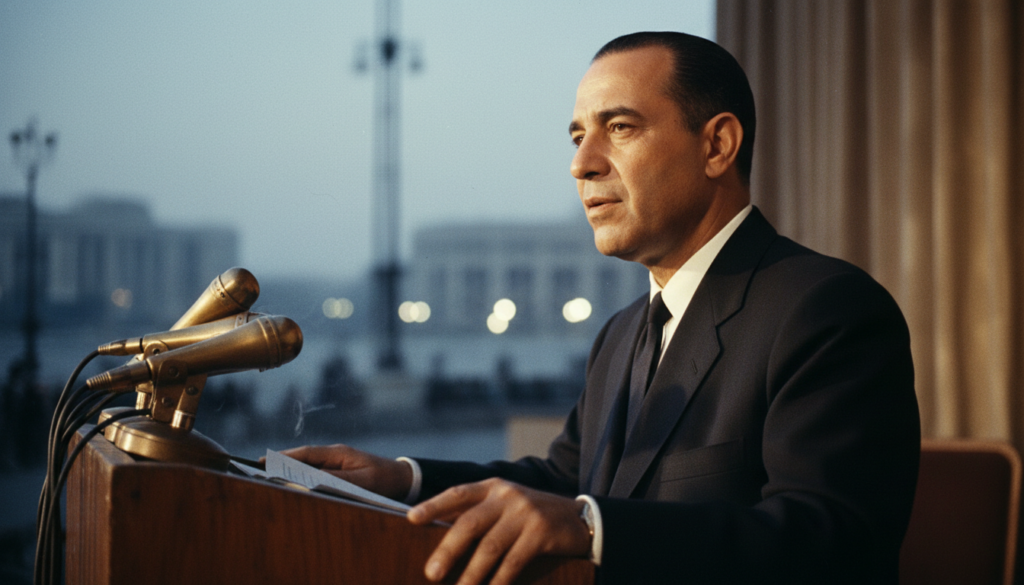
Year: 1956
On July 26, 1956, Egyptian President Gamal Abdel Nasser nationalized the Suez Canal Company, transferring control of the strategic waterway from British and French interests to Egypt. The move asserted Egyptian sovereignty and aimed to use canal revenues to finance the Aswan High Dam, but it prompted Britain, France, and Israel to attack Egypt in the Suez Crisis. Amid decolonization and Cold War rivalry, international pressure forced the invading powers to withdraw, weakening British and French influence and strengthening Nasser’s standing in the Arab world.
Attack on the Moncada Barracks

Attack on the Moncada Barracks

Year: 1953
On July 26, 1953, Fidel Castro and roughly 160 rebels attacked the Moncada Barracks in Santiago de Cuba, but the assault failed and many rebels were killed or captured. The attack made Castro a prominent opponent of Fulgencio Batista and gave its date to the July 26 Movement, which later led the Cuban Revolution. It occurred amid resistance to Batista’s dictatorship after his 1952 coup; Castro was imprisoned, later exiled, and returned to wage the campaign that overthrew Batista in 1959.
Potsdam Declaration Issued

Potsdam Declaration Issued

Year: 1945
On July 26, 1945, the United States, Britain, and China issued the Potsdam Declaration, demanding Japan’s unconditional surrender in World War II. It outlined surrender terms and warned of “prompt and utter destruction” if Japan refused, making it a final major ultimatum before the war ended. After Japan did not accept, the United States dropped atomic bombs on Hiroshima and Nagasaki, the Soviet Union entered the war against Japan, and Japan surrendered in August.
Bureau of Investigation Founded

Bureau of Investigation Founded

Year: 1908
On July 26, 1908, the U.S. Department of Justice established an investigative force that became the Bureau of Investigation and, in 1935, the Federal Bureau of Investigation. It mattered because it created a permanent federal agency to investigate crimes under the expanding jurisdiction of the national government. Its founding reflected the Progressive Era’s drive for professional law enforcement as industrialization and interstate activity made some crimes increasingly national in scope.