![[e]Photo Stream](/logo.png)

July 3
5 moments across history
Boris Yeltsin Re-elected as Russian President
On July 3, 1996, Russian President Boris Yeltsin won a second term by defeating Communist challenger Gennady Zyuganov in a decisive runoff election. This outcome mattered deeply because it prevented a return to communist rule and kept the nation on a fragile trajectory toward democratic and market-oriented reforms. The election occurred during the chaotic post-Soviet transition, a historical period defined by severe economic instability, the rising influence of oligarchs, and the struggle to define Russia's new political identity after the collapse of the USSR.
Boris Yeltsin Re-elected as Russian President
Downing of Iran Air Flight 655

Downing of Iran Air Flight 655

Year: 1988
On July 3, 1988, the U.S. Navy cruiser USS Vincennes shot down Iran Air Flight 655 over the Persian Gulf, killing all 290 civilians on board. The tragedy severely damaged U.S.-Iran relations and fueled long-lasting anti-American sentiment, as Iran rejected the U.S. claim that it was an accidental misidentification. The disaster unfolded during the "Tanker War" phase of the Iran-Iraq War, a period of heightened naval conflict where international forces were deployed to protect commercial shipping in the region.
Liberation of Minsk
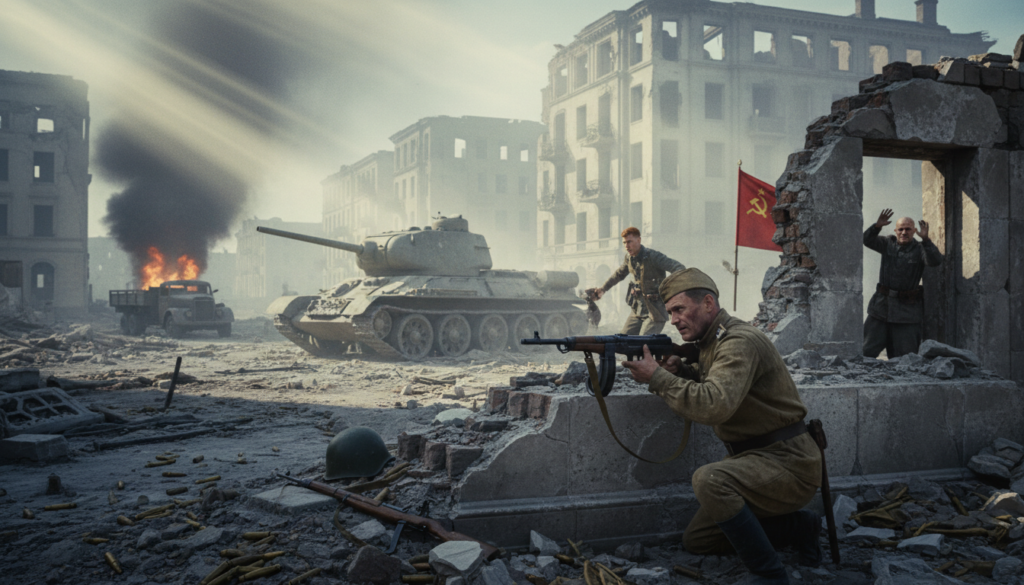
Event 3

Year: 1944
On July 3, 1944, Soviet forces successfully recaptured the city of Minsk from Nazi German occupation during World War II. This victory mattered because it led to the encirclement and destruction of over 100,000 German troops from Army Group Centre, crippling their eastern front. In the broader historical context, this event was a pivotal success of Operation Bagration, which shattered German defenses and pushed Soviet forces toward the borders of Poland.
Battle of Santiago de Cuba

Battle of Santiago de Cuba

Year: 1898
On July 3, 1898, an American naval fleet destroyed a Spanish squadron under Admiral Pascual Cervera as it attempted to escape the blockaded harbor at Santiago de Cuba. This decisive victory secured American naval dominance in the Caribbean, leading to the rapid surrender of Santiago and the collapse of Spanish resistance in Cuba. The battle served as a pivotal moment in the Spanish-American War, a broader conflict that ended Spain's colonial empire in the Americas and established the United States as a global power.
Idaho Statehood

Idaho Statehood

Year: 1890
On July 3, 1890, Idaho officially became the 43rd state of the United States after President Benjamin Harrison signed the statehood proclamation. This transition mattered because it granted the territory's residents full voting representation in Congress and complete constitutional rights within the Union. The event fit into the broader historical context of late nineteenth-century American Western expansion, which saw numerous frontier territories rapidly admitted to stabilize regional governance.