![[e]Photo Stream](/logo.png)
July 16
5 moments across history
Mission San Diego Founded
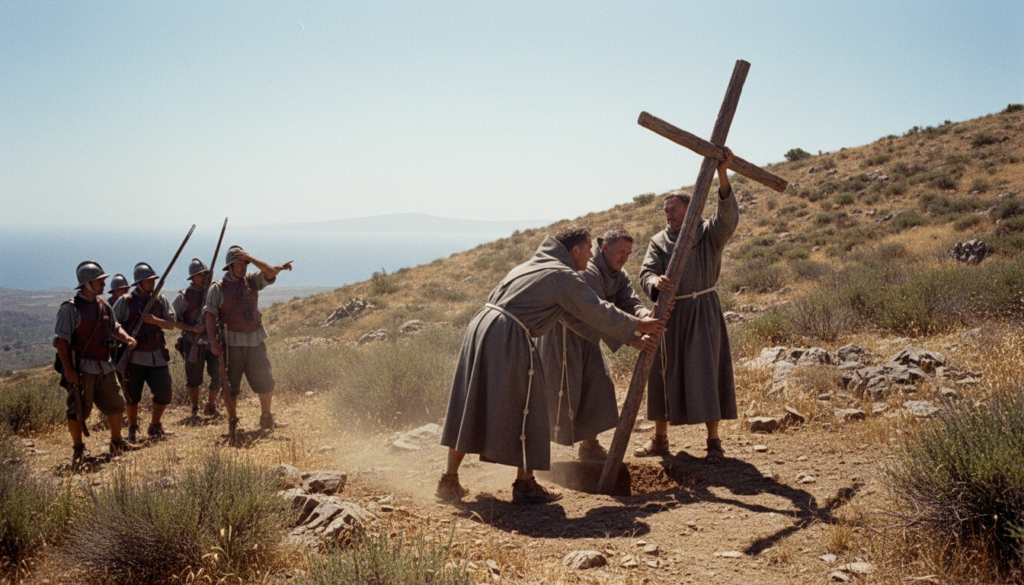
Model: `deepseek/deepseek-v4-flash` Source: `OpenRouter` - 1769: Father Junípero Serra founded Mission San Diego de Alcalá, the first Spanish mission in Alta California. On July 16, 1769, Franciscan friar Junípero Serra consecrated Mission San Diego de Alcalá on a sunbaked hill overlooking San Diego Bay, planting the cross that marked the beginning of Spanish colonization in Alta California. The mission was part of a coordinated colonial effort under Spanish King Carlos III to secure the Pacific coast against Russian and British encroachment. Serra and Gaspar de Portolá had trekked north from Baja California through punishing terrain, establishing a presidio just days before the mission's founding. The mission's original structures were modest — a brushwood chapel, adobe quarters, and a crude stockade — but it became the first link in the chain of 21 California missions that would reshape the region's demographics, ecology, and indigenous cultures over the next six decades. The site today sits in what is now Presidio Park in modern San Diego, and the mission was rebuilt multiple times after earthquakes and secularization before being reconstructed in its current form in the 1930s. - Title: Mission San Diego Founded - One-line Summary: Father Serra establishes the first Spanish mission in Alta California, beginning the mission era. - Year: 1769 - Context: The founding initiated the Spanish mission system that transformed California over 60 years. A wide cinematic shot on a blazing July afternoon in 1769, looking across a dry coastal valley dotted with scrub oak and sage. In the foreground, Franciscan friar Junípero Serra — a slight man in a coarse gray-brown habit with a tonsured crown, his face weathered and intense — raises a simple wooden cross perhaps eight feet tall, both hands gripping the shaft as he plants it into the rocky soil. Two other friars in identical habits stand slightly behind him, heads bowed in prayer. To the left, Spanish soldiers in leather jackets, tall morion helmets, and crossbelts stand at watch, their muskets held loosely; one soldier's face shows the wear of a long march with dirt-caked boots and a week's stubble. A crude altar of stacked stones with a small brass crucifix sits beside Serra. In the midground, the skeletal frames of a brushwood chapel and a few tent-like structures made of tule reeds are visible under construction — lashing poles together, a mule laden with supplies tied nearby. The bay of San Diego glimmers in the distance, a silver-blue strip between golden hills. The sky is a deep summer blue with a faint haze of heat and a single lenticular cloud over the eastern mountains. The lighting is harsh high sun with deep shadows — the kind of light that makes soldiers squint and friars wipe sweat from their brows. The scene feels raw, uncertain, and monumental: a handful of exhausted Europeans claiming a vast land they barely understand. Photojournalistic wide shot of Father Junípero Serra planting a wooden cross on a sunbaked California hill in 1769. Two friars in gray-brown habits pray behind him. Spanish soldiers in morion helmets and leather jackets stand guard in the foreground, one with dirt-caked boots. A brushwood chapel under construction behind, crude reed tents, a laden mule. San Diego Bay glitters in the distance between golden hills. Harsh overhead sun, deep shadows, dust rising from dry soil. Cinematic, editorial style, 16:9 aspect ratio, shot on vintage-style film with slight grain, warm golden-olive color palette, asymmetrical framing with the cross dominating the left third.
1769: Father Junípero Serra plants the cross at Mission San Diego, the first Spanish mission in Alta California.
Washington, D.C. Established
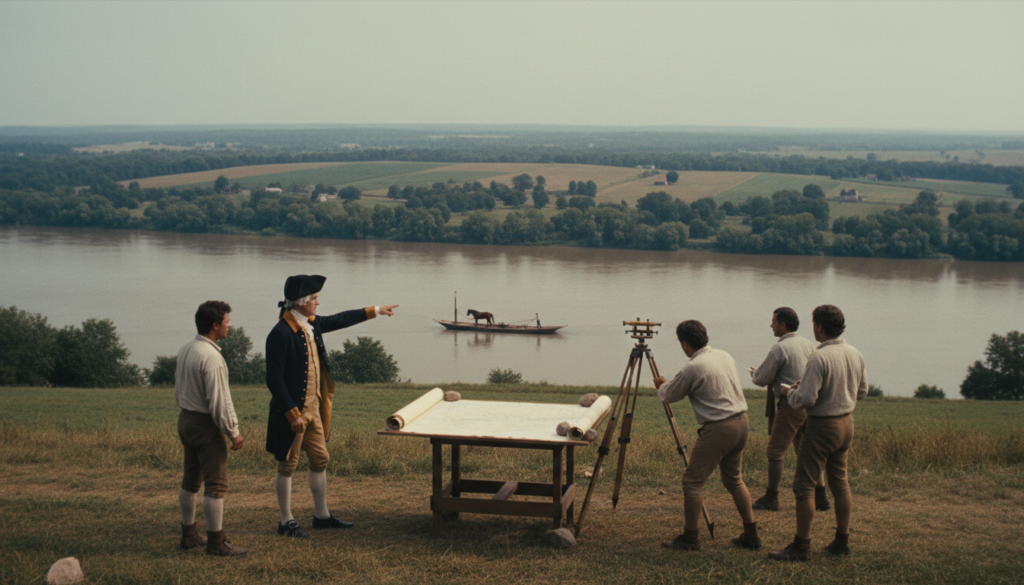
1790: President George Washington selects the Potomac River site for the new federal capital, establishing Washington, D.C.
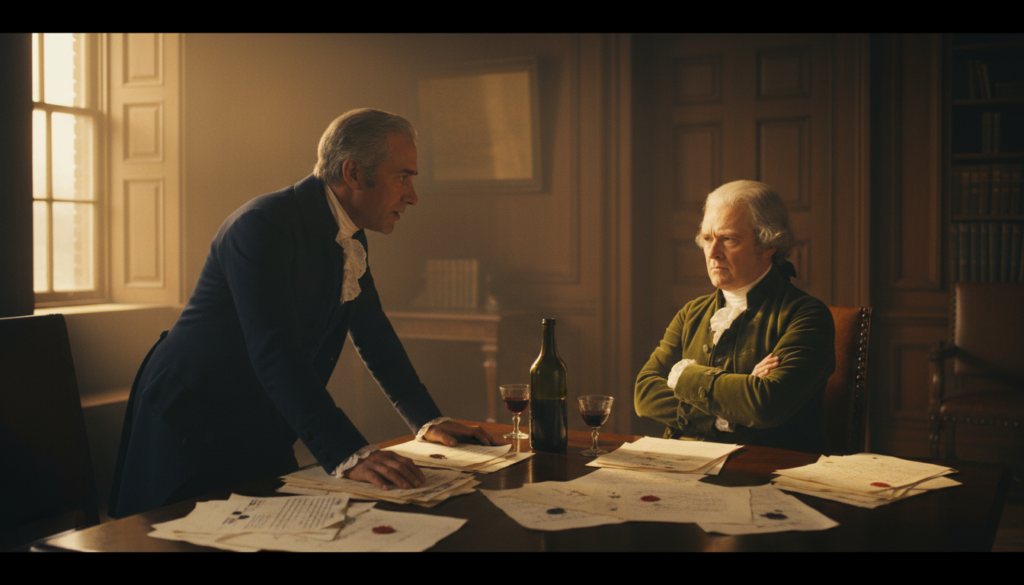
1790: President George Washington selects the Potomac River site for the new federal capital, establishing Washington, D.C.
Model: `deepseek/deepseek-v4-flash` Source: `OpenRouter` - 1790: The District of Columbia was established as the permanent capital of the United States via the Residence Act. On July 16, 1790, the United States Congress passed the Residence Act, designating a site along the Potomac River — selected personally by President George Washington — as the permanent seat of the federal government. The act was the result of a bitter compromise between Alexander Hamilton and Thomas Jefferson: Hamilton's plan for federal assumption of state debts gained Southern votes in exchange for locating the capital in the South. Washington personally chose the precise location, a largely undeveloped territory of tidal marsh, tobacco plantations, and rolling woodland that would become Washington, D.C. The French-born engineer Pierre Charles L'Enfant was commissioned to design the federal city, envisioning grand boulevards, radial avenues, and monumental public squares inspired by Versailles and Paris. The federal government officially moved from Philadelphia to Washington in 1800, occupying a still-unfinished Capitol building. - Title: Washington, D.C. Established - One-line Summary: Congress creates a new federal capital on the Potomac as part of the Hamilton-Jefferson Compromise. - Year: 1790 - Context: The Residence Act resolved the North-South deadlock over the nation's capital location, shaping American political geography. An elevated wide shot looking across the Potomac River from the Virginia side on a humid summer day in July 1790. The foreground shows a grassy shore dotted with wildflowers and a few massive old oaks. In the midground, the river is wide and slow-moving, its brown-green water reflecting a hazy sky. On the far bank, the Maryland shore rises gently — a landscape of small tobacco fields, scattered farmhouses with wood smoke rising from their chimneys, and dense stands of hardwood trees. A single flat-bottomed ferry boat with two men and a horse crosses the river. George Washington himself — tall, erect, in a dark civilian coat and white cravat, his white hair powdered — stands on a slight rise on the Maryland side, pointing with a folded surveyor's map in hand, surrounded by several men in 1790s waistcoats and tricorn hats: surveyors, perhaps Andrew Ellicott and a young Black assistant, Benjamin Banneker. A surveyor's tripod with a theodolite is set up nearby. The land before them is raw and open: marsh grasses, a few fields of corn and tobacco, a distant dirt road curving between trees. The light is soft and hazy, filtered through clouds and humidity — the kind of thick summer atmosphere that blurs the far treeline into smoky blue. The mood is one of anticipation and ambitious vision: a capital city about to rise from what is still wilderness. Cinematic aerial-adjacent view across the Potomac River in July 1790, Maryland shore in the distance with tobacco fields and farmsteads. George Washington in dark coat and tricorn hat stands on a grassy rise holding a surveyor's map and pointing toward the undeveloped landscape. Survey team with tripod and theodolite nearby. A flatboat ferries a horse across the wide brown-green river. Haze and humidity soften the far treeline into blue-gray. Soft cloud-filtered light, muted earth and green tones, slight film grain. Documentary historical style, 16:9, wide establishing shot showing the raw land that would become Washington, D.C.
Romanov Execution
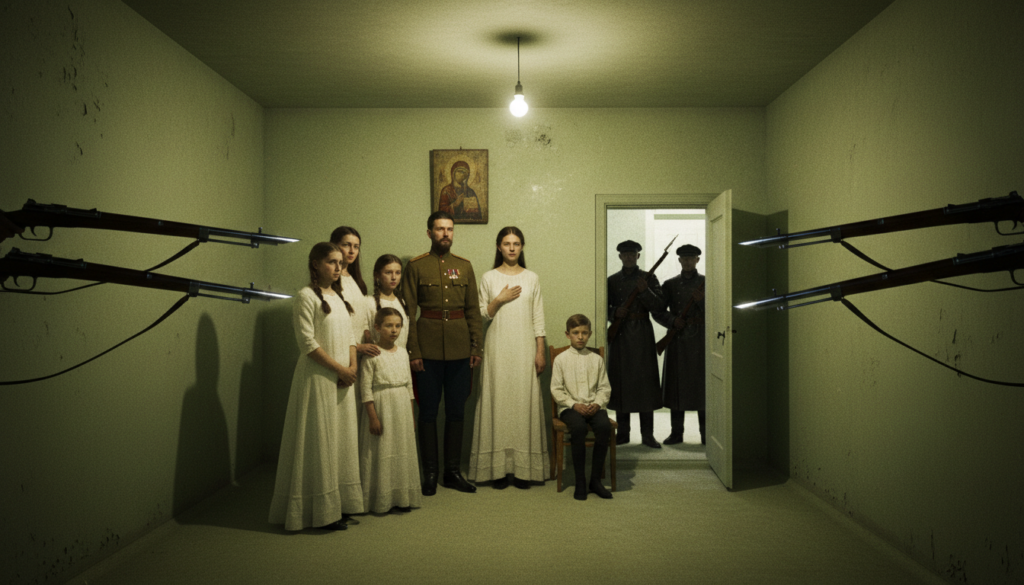
1918: Tsar Nicholas II and his family are executed by Bolshevik forces in Yekaterinburg, ending the Romanov dynasty.
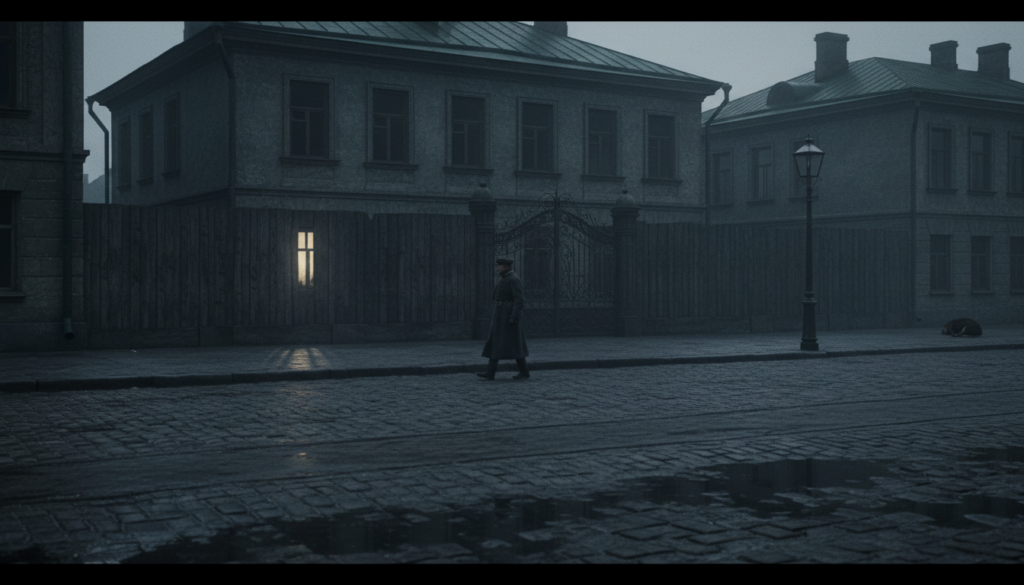
1918: Tsar Nicholas II and his family are executed by Bolshevik forces in Yekaterinburg, ending the Romanov dynasty.
Model: `deepseek/deepseek-v4-flash` Source: `OpenRouter` - 1918: The Bolsheviks executed Tsar Nicholas II and his family in Yekaterinburg, ending the Romanov dynasty. In the early hours of July 17, 1918 (the night of July 16 local time), Tsar Nicholas II, Tsarina Alexandra, their five children — Olga, Tatiana, Maria, Anastasia, and Alexei — and four loyal retainers were awakened and ordered to dress and descend to the basement of the Ipatiev House in Yekaterinburg, where they had been held under house arrest for 78 days. The family was told to pose for a photograph to reassure the public of their safety; instead, a firing squad led by Yakov Yurovsky entered and opened fire at close range. The execution was ordered by the Ural Soviet and approved by Lenin's government in Moscow, who feared that advancing White Army forces might liberate the imperial family. The bodies were hastily buried in a shallow pit near the village of Koptyaki, then moved and disposed of with acid down a mineshaft. The execution ended the 304-year Romanov dynasty that had ruled Russia since 1613. The true fate of the family remained a mystery for decades, surrounded by rumors and pretenders, until the remains were definitively identified through DNA testing in the 1990s and 2007. - Title: Romanov Execution - One-line Summary: The Bolsheviks execute Tsar Nicholas II and his family, ending the 304-year Romanov dynasty. - Year: 1918 - Context: The execution symbolized the irreversibility of the Bolshevik Revolution and extinguished the Russian imperial line. The cramped, dimly lit basement room of the Ipatiev House in Yekaterinburg — approximately 6 by 7 meters with a single barred window high on one wall, painted in pale institutional green that flakes from the plaster. The scene is frozen at the moment just after the door bursts open. The Tsar and his family are still in their nightclothes — Nicholas in a simple soldier's tunic and trousers, Alexandra in a white blouse and dark skirt, the grand duchesses in white dresses they had sewn themselves, the hem of one torn and dirty. Tsarevich Alexei, 13 years old and unable to stand due to his hemophilia, sits propped against a wooden chair, his face pale with fright. The family clings together, the daughters making the sign of the cross. The doorway frames the silhouettes of armed men in leather coats and flat caps, their rifles raised. A single bare electric bulb hangs from the ceiling, casting harsh shadows across the faces — the only light source, creating deep hollows under eyes and cheekbones. The walls are smudged with handprints, the floor is worn wooden planks. The air is close, suffocating with fear and stale cigarette smoke. A small icon of the Virgin hangs askew on the wall behind the family. The composition is claustrophobic, the angle from slightly behind the firing squad, showing the backs of their heads and shoulders as they face the family, the gun barrels catching the harsh light. Claustrophobic interior of a dim basement room in the Ipatiev House, Yekaterinburg, July 1918. Tsar Nicholas II in a soldier's tunic stands with his family — the Tsarina in white, five children in white dresses, 13-year-old Alexei propped against a chair. A hanging electric bulb casts harsh shadows on green-painted plaster walls. The family huddles together, one daughter making the sign of the cross. In the foreground, silhouetted rifle barrels and the backs of men in leather coats and flat caps. A small icon hangs askew on the wall. Cinematic, tense, historical documentary style. Shallow depth of field, slightly desaturated with yellow-green tint, film grain. 16:9.
Trinity Test
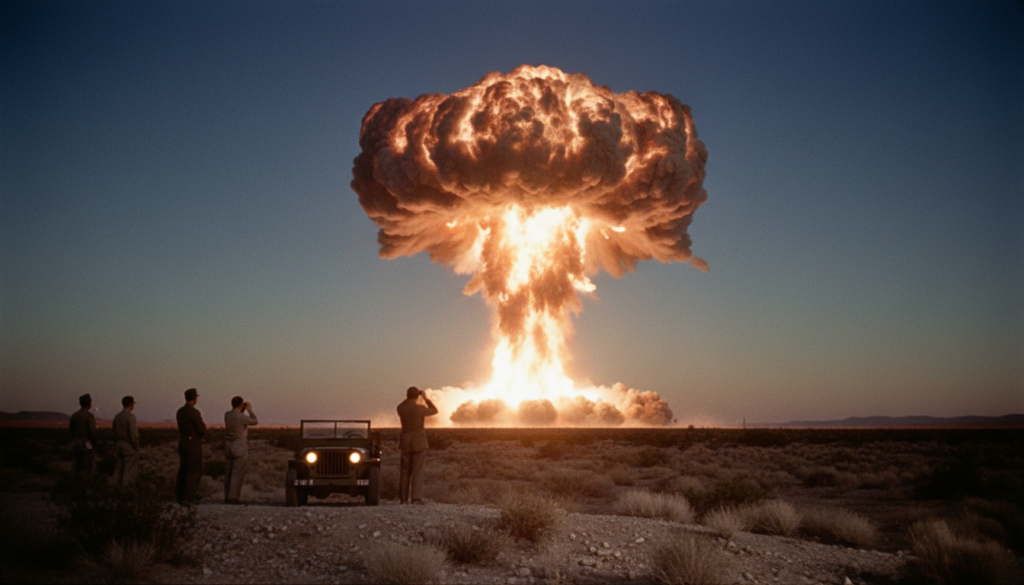
1945: The Manhattan Project detonates the first atomic bomb at the Trinity test site near Alamogordo, New Mexico.
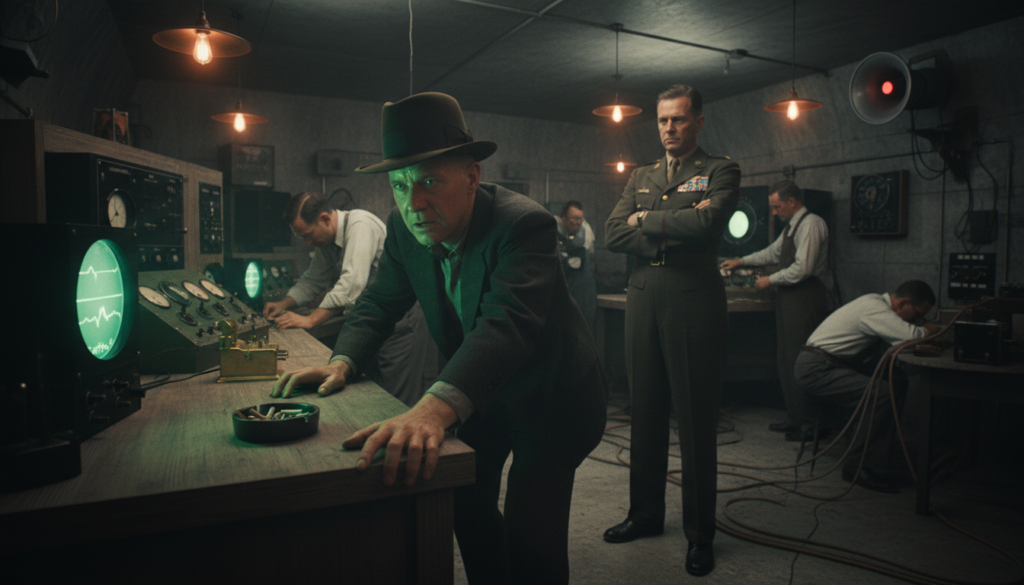
1945: The Manhattan Project detonates the first atomic bomb at the Trinity test site near Alamogordo, New Mexico.
Model: `deepseek/deepseek-v4-flash` Source: `OpenRouter` - 1945: The Trinity test, the first detonation of a nuclear weapon, took place near Alamogordo, New Mexico. At precisely 5:29:45 a.m. Mountain War Time on July 16, 1945, the world's first atomic bomb — code-named "Gadget" — was detonated atop a 100-foot steel tower at the Trinity test site in the Jornada del Muerto desert of New Mexico. The plutonium implosion device produced an explosion equivalent to approximately 21 kilotons of TNT, vaporizing the tower, fusing the desert sand into a green glassy mineral called trinitite, and generating a fireball that was visible from over 200 miles away. The blinding flash was brighter than any sun and was followed by the iconic mushroom cloud that rose over 40,000 feet into the stratosphere. J. Robert Oppenheimer, the scientific director of the Manhattan Project, later recalled a line from the Bhagavad Gita: "Now I am become Death, the destroyer of worlds." The successful test cleared the way for the deployment of atomic weapons against Japan less than a month later, ushering in the nuclear age and fundamentally altering the course of human civilization. - Title: Trinity Test - One-line Summary: The Manhattan Project detonates the world's first atomic bomb in the New Mexico desert. - Year: 1945 - Context: The successful test opened the nuclear age and led directly to the bombings of Hiroshima and Nagasaki. A wide landscape shot taken from the base camp at Compañia Hill, about 10 miles from ground zero, moments after the detonation at 5:29 a.m. on July 16, 1945. The pre-dawn New Mexico desert stretches across the frame in shades of gray-brown — creosote bush, sage, and sparse grass on the arid plain. In the distance, an enormous mushroom cloud is still forming, its stem a brilliant orange-white column of superheated air and debris, the cap expanding outward in billowing rings of brown, gray, and pink against the dark blue pre-dawn sky. The cloud is backlit from within, glowing with its own light. The fireball at the base has already begun to fade but still pulses with intense red-orange heat. In the foreground, silhouetted figures of scientists and military personnel stand on the ridge — some with arms crossed, some shading their eyes, one man holding a pair of binoculars that catch the distant glow. A jeep is parked nearby with its headlights still on, cutting twin cones of light across the dusty ground. The scene is captured with the slight grain and limited dynamic range of 1940s Kodachrome film: deep shadows, blown highlights in the fireball, a sky that transitions from charcoal at the top to the sickly orange-brown glow of the cloud near the horizon. The scale is staggering: the man-made thunderhead dwarfs the mountain ranges on either side. Wide shot of the Trinity test site at dawn on July 16, 1945. The mushroom cloud rises over the New Mexico desert, a colossal column of orange-white fire and brown-gray smoke with billowing rings, backlit from within, still glowing against the dark blue pre-dawn sky. In the foreground, silhouetted scientists and officers stand on a ridge watching, some using binoculars. A jeep's headlights cut through the dust near them. Kodachrome-style color film rendering: deep shadows, blown highlights, muted browns and greens in the desert foreground contrasting with the brilliant fireball. 16:9, documentary historical photography, showing the vast scale of the blast against the landscape.
Apollo 11 Launch
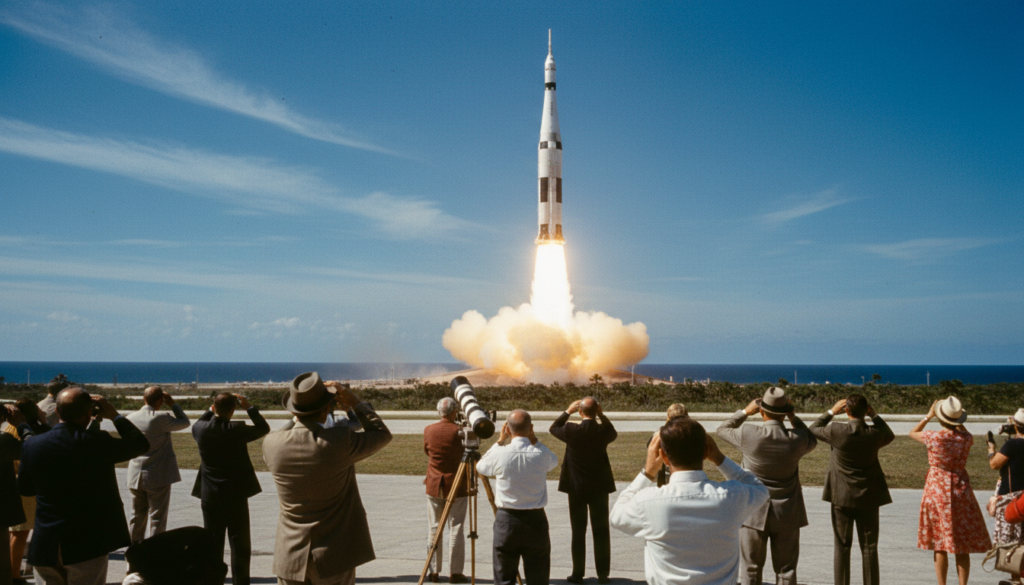
1969: Apollo 11 launches from Kennedy Space Center carrying Armstrong, Aldrin, and Collins to the Moon.
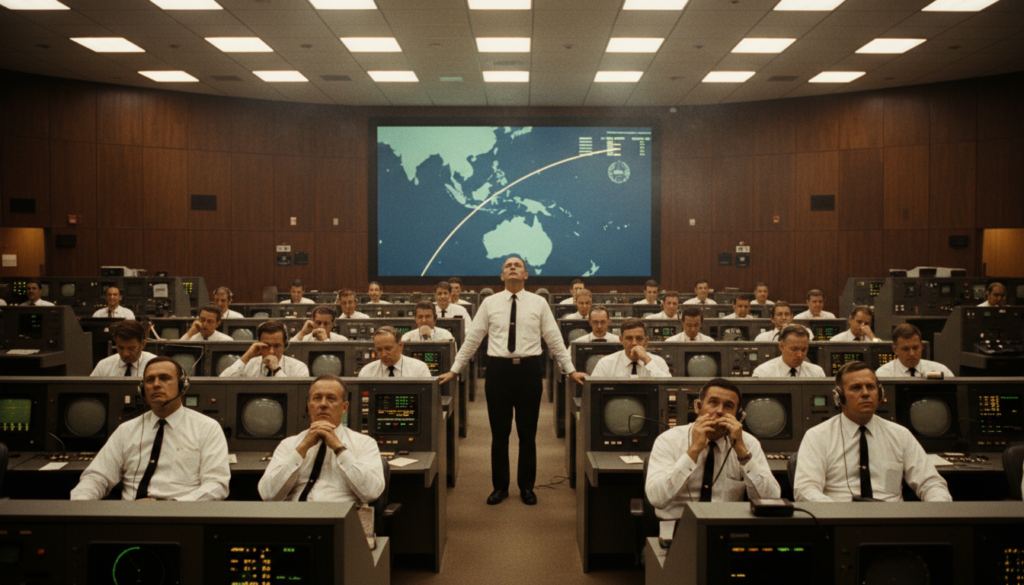
1969: Apollo 11 launches from Kennedy Space Center carrying Armstrong, Aldrin, and Collins to the Moon.
Model: `deepseek/deepseek-v4-flash` Source: `OpenRouter` - 1969: Apollo 11, the first manned lunar landing mission, launched from Kennedy Space Center. On July 16, 1969, at 9:32 a.m. Eastern Daylight Time, the Saturn V rocket carrying the Apollo 11 spacecraft lifted off from Launch Complex 39A at Kennedy Space Center in Florida, carrying astronauts Neil Armstrong, Buzz Aldrin, and Michael Collins on humanity's first voyage to the lunar surface. The mission was the culmination of the Apollo program, a national effort born from President John F. Kennedy's 1961 challenge to land a man on the Moon and return him safely to Earth before the decade ended. The Saturn V — the most powerful rocket ever built — generated 7.6 million pounds of thrust as it rose on a column of fire visible for miles across the Florida coast. Over 650 million people worldwide watched the launch via live television broadcast, and a million spectators gathered on the beaches and roads surrounding Cape Canaveral. Four days later, on July 20, Armstrong would step onto the lunar surface and utter the unforgettable words: "That's one small step for man, one giant leap for mankind." - Title: Apollo 11 Launch - One-line Summary: The Saturn V rocket launches the first manned mission to the Moon from Cape Canaveral. - Year: 1969 - Context: Apollo 11 fulfilled JFK's goal of landing Americans on the Moon before 1970. A ground-level shot from the press viewing area approximately 3.5 miles from Launch Complex 39A at Kennedy Space Center, captured at the moment of liftoff at 9:32 a.m. on July 16, 1969. The Saturn V rocket fills the frame — its black-and-white roll pattern distinct — as it rises on an enormous billowing cloud of brilliant orange flame and gray-white steam from the water suppression system. The exhaust plume erupts laterally across the concrete pad, lit from within by the intense combustion. The rocket's motion is at first impossibly slow, then accelerates as the five F-1 engines consume propellant at a rate of 15 tons per second. In the foreground, a crowd of journalists and VIPs in 1960s attire — men in short-sleeved shirts and narrow ties, women in sleeveless dresses and sunglasses — shields their eyes and points upward. One photographer has a 35mm film camera with a long lens mounted on a tripod. Beyond the launch pad, the Atlantic Ocean stretches flat and blue, dotted with cloud shadows. A line of television broadcast trucks with tall antennae are parked to the left. The Florida heat shimmers off the asphalt, creating a heat-haze distortion that softens the rocket's base. The sky is a brilliant Florida blue with scattered high cirrus clouds. The mood is electric — a mixture of awe, hope, and the tension of the most audacious risk in human history. Ground-level view of the Apollo 11 Saturn V launch from the press area, Kennedy Space Center, July 16, 1969. The black-and-white rocket rises on a massive column of orange flame and white steam over the concrete pad. In the foreground, journalists and VIPs in 1960s attire shield their eyes and watch, one with a long-lens camera on a tripod. The Atlantic Ocean stretches behind the pad. Brilliant blue Florida sky with high cirrus clouds. Heat haze shimmers from the asphalt. 1960s Kodachrome color palette: warm, saturated, slightly grainy. Documentary photojournalism style, 16:9.