![[e]Photo Stream](/logo.png)

May 20
5 moments across history
East Timor Gains Independence
On May 20, 2002, East Timor formally became the Democratic Republic of Timor-Leste, a sovereign nation after a UN-supervised transition ending decades of Indonesian occupation. It was the first new state of the 21st century, symbolizing the triumph of self-determination and post-colonial recovery following a violent struggle. The event marked the culmination of a long process rooted in colonialism, annexation, and international intervention, highlighting the ongoing challenges of nation-building in a post-imperial world.
East Timor Gains Independence
Freedom Riders Attacked in Montgomery (1961)

Freedom Riders Attacked in Montgomery (1961)

Year: 1961
On May 20, 1961, a white mob attacked Freedom Riders at the Montgomery bus station despite a court order, beating civil rights activists who were testing desegregation of interstate travel. The violence sparked national outrage and pressured the federal government to enforce the desegregation of interstate bus terminals and facilities. This event was part of the broader civil rights movement, following the Supreme Court’s 1960 Boynton v. Virginia ruling that segregation in interstate transportation was illegal.
German Airborne Invasion of Crete (Operation Mercury)

German Airborne Invasion of Crete (Operation Mercury)

Year: 1941
On May 20, 1941, Nazi paratroopers launched Operation Mercury, the first major airborne assault in history, invading Crete. The fierce battle resulted in heavy German casualties, prompting Hitler to abandon large-scale airborne operations for the rest of World War II. This decision shaped subsequent Allied airborne campaigns, like D-Day, and highlighted the strategic limits of paratrooper forces.
Charles Lindbergh Departs for First Solo Transatlantic Flight
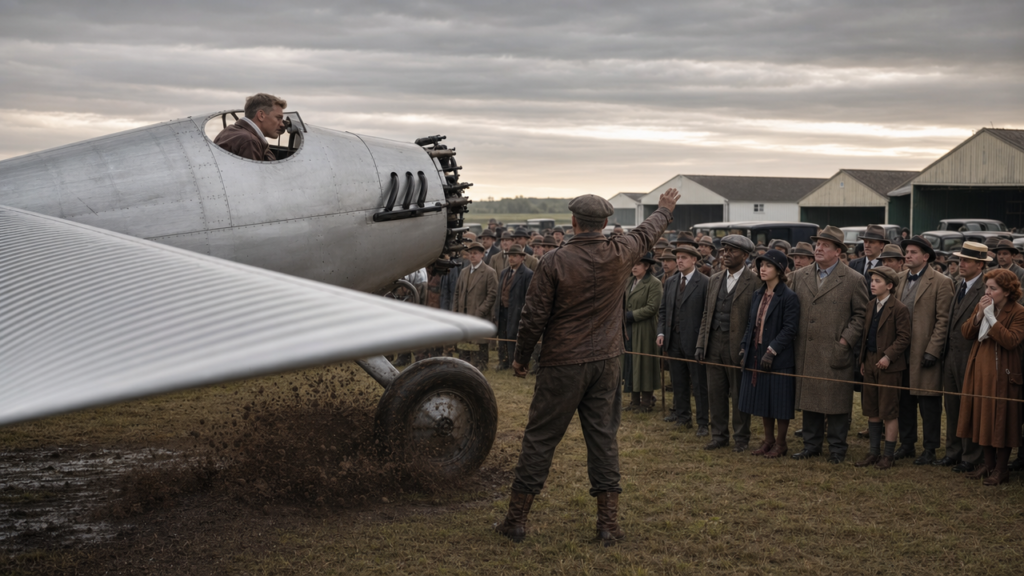
Event 4

Year: 1927
On May 20, 1927, Charles Lindbergh departed from Roosevelt Field, New York, in the *Spirit of St. Louis* for the first solo nonstop transatlantic flight, landing in Paris the next day. This achievement demonstrated the viability of long-distance air travel, sparking a revolution in aviation and elevating Lindbergh to international hero status. The flight occurred during the "Golden Age of Aviation," a period of intense competition and public fascination with aerial records and technological progress.
Patent for Riveted "Waist Overalls" – First Blue Jeans

Patent for Riveted "Waist Overalls" – First Blue Jeans

Year: 1873
On May 20, 1873, Levi Strauss and Jacob Davis patented riveted "waist overalls" as US patent no. 139,121, creating the first blue jeans. This innovation provided durable workwear for American laborers during the Industrial Revolution and westward expansion. The patent's practical design later made jeans a global fashion staple, transcending their original utilitarian purpose.