![[e]Photo Stream](/logo.png)
April 19
5 moments across history
Battles of Lexington and Concord
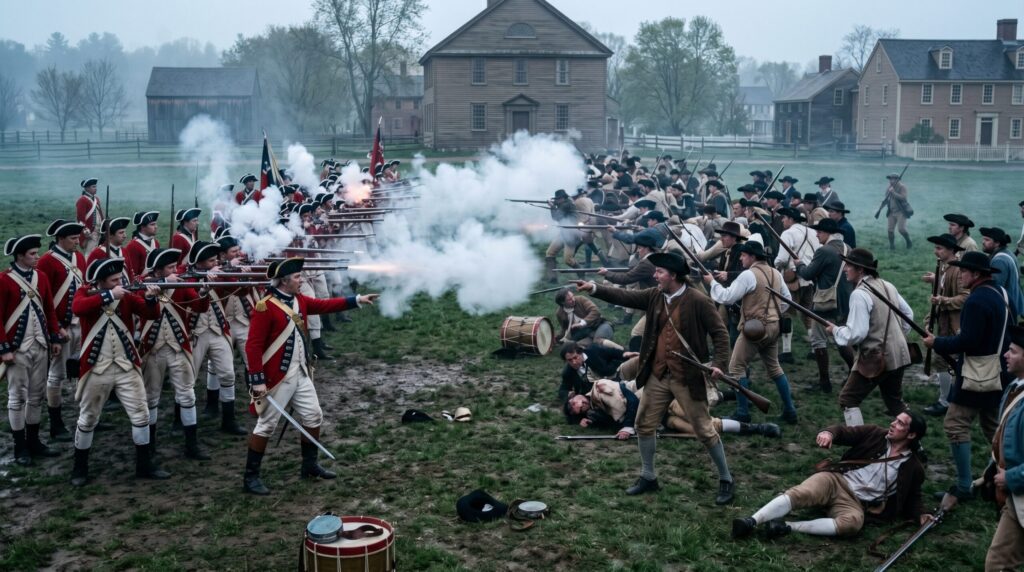
The American Revolutionary War began on April 19, 1775, with the Battles of Lexington and Concord in Massachusetts. Following years of escalating tensions between the British Crown and the thirteen American colonies, British troops marched from Boston to seize hidden munitions and arrest rebel leaders. At dawn in Lexington, a "shot heard 'round the world" was fired, leading to a skirmish that left eight colonists dead. The British continued to Concord, where they encountered hundreds of militiamen at the Old North Bridge. Forced to retreat, the British suffered heavy casualties during a harrowing 18-mile march back to Boston, marking the point of no return for American independence.
A cinematic reconstruction of the "Shot Heard 'Round the World" on Lexington Green, showing the chaotic moment of the first volley between British Redcoats and colonial Minutemen.
Warsaw Ghetto Uprising
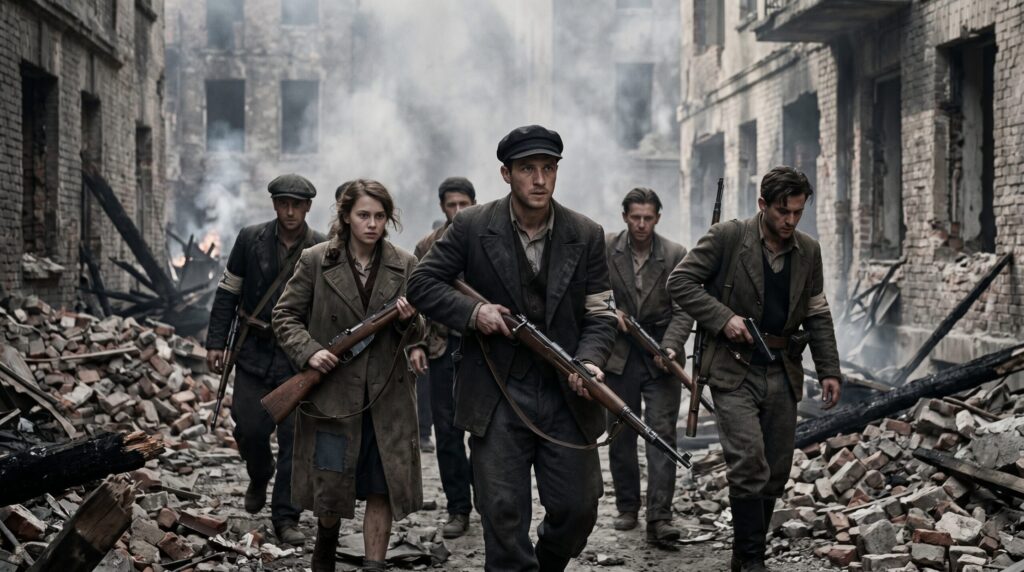
Jewish resistance fighters moving through the smoky ruins of the Warsaw Ghetto, armed with scavenged rifles and determined expressions.
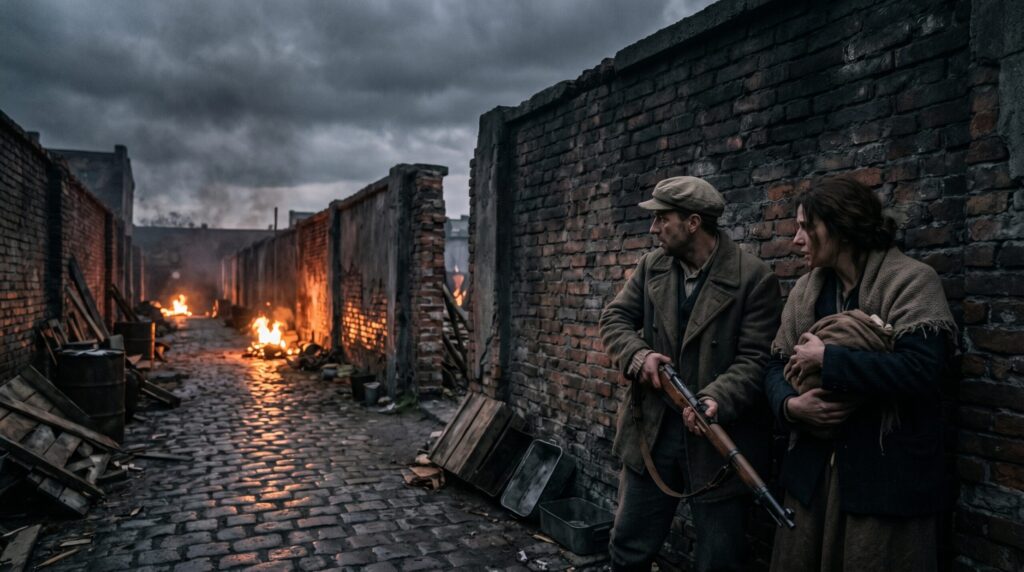
A poignant view of the Ghetto walls under a dark, heavy sky, with the flickering light of fires reflecting off the cobblestones.
On April 19, 1943, the Warsaw Ghetto Uprising began as Jewish resistance fighters in Nazi-occupied Poland launched a desperate, heroic armed struggle against deportation to death camps. When German forces entered the ghetto to conduct a final liquidation, they were met with Molotov cocktails, pistols, and home-made grenades. Led by the Jewish Combat Organization (ŻOB) and the Jewish Military Union (ZZW), the insurgents held out for nearly a month against overwhelming military force. Although the uprising was eventually suppressed and the ghetto destroyed, it remains an enduring symbol of courage and defiance against the Holocaust.
Oklahoma City Bombing
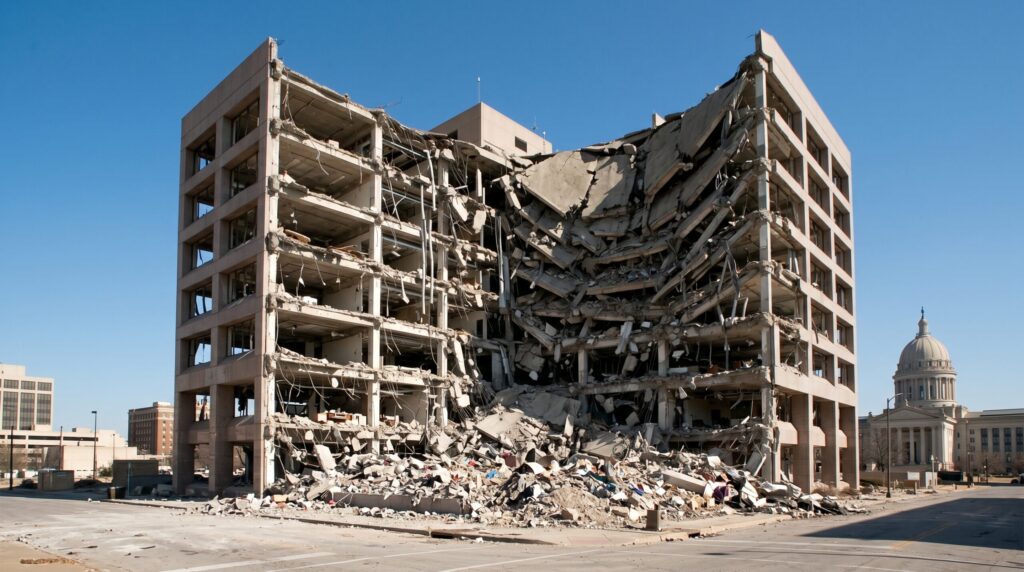
The haunting remains of the Alfred P. Murrah Federal Building, showing the "pancake" collapse of the floors against a clear blue Oklahoma sky.
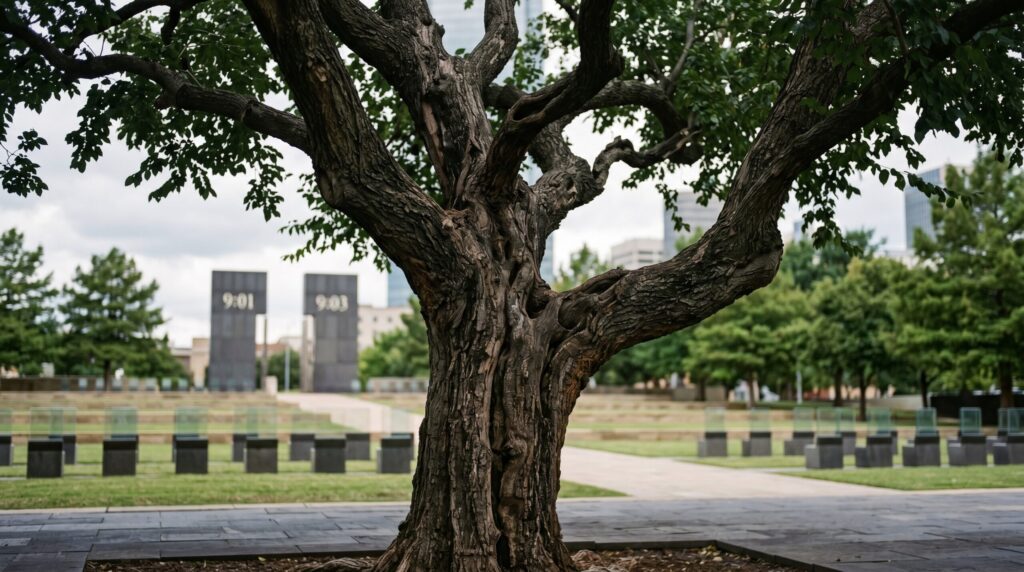
A close-up of the "Survivor Tree," an American elm that lived through the blast, standing as a symbol of the city's strength and recovery.
On the morning of April 19, 1995, a truck bomb exploded outside the Alfred P. Murrah Federal Building in Oklahoma City, Oklahoma. The blast, orchestrated by domestic terrorists, destroyed a third of the building, killed 168 people—including 19 children in a second-floor daycare—and injured hundreds more. It was the deadliest act of domestic terrorism in United States history. The event led to significant changes in federal building security and sparked a national conversation about the threat of anti-government extremism. The Oklahoma City National Memorial now stands on the site as a place of remembrance and resilience.
Launch of Salyut 1

The Salyut 1 space station in low Earth orbit, its solar panels catching the brilliant glare of the sun against the deep black of space.
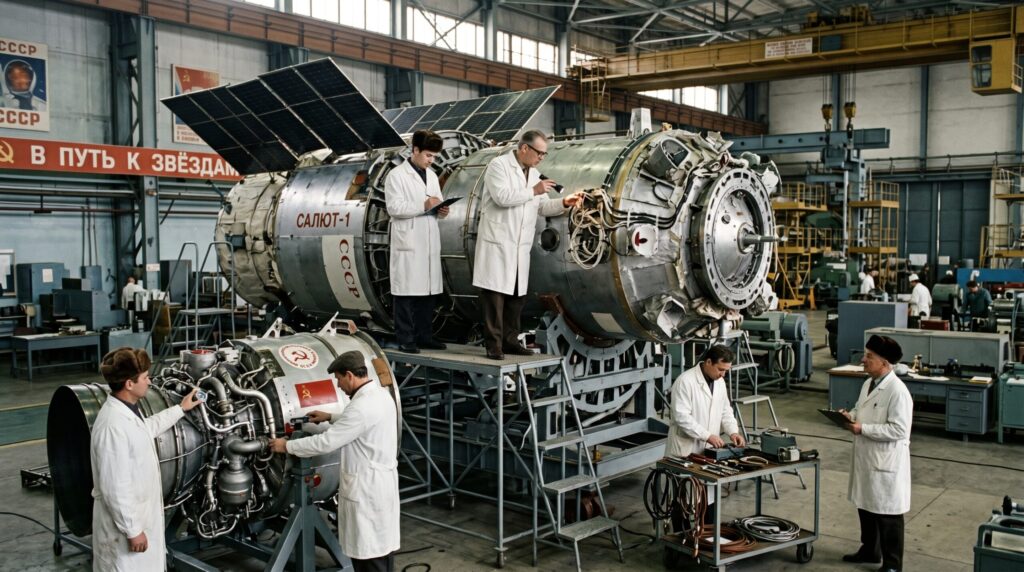
Soviet engineers in white lab coats performing final inspections on the Salyut 1 module inside the Baikonur Cosmodrome assembly hall.
The Soviet Union made history on April 19, 1971, by launching Salyut 1, the world’s first space station. Carried into orbit by a Proton rocket, Salyut 1 was a modular laboratory designed to test the long-term effects of weightlessness on humans and conduct astronomical observations. Although its primary mission was marred by the tragic death of the Soyuz 11 crew during their return to Earth, the station itself was a technical triumph. It paved the way for future orbital outposts, including Mir and the International Space Station (ISS), establishing the foundation for a permanent human presence in space.
Death of Lord Byron
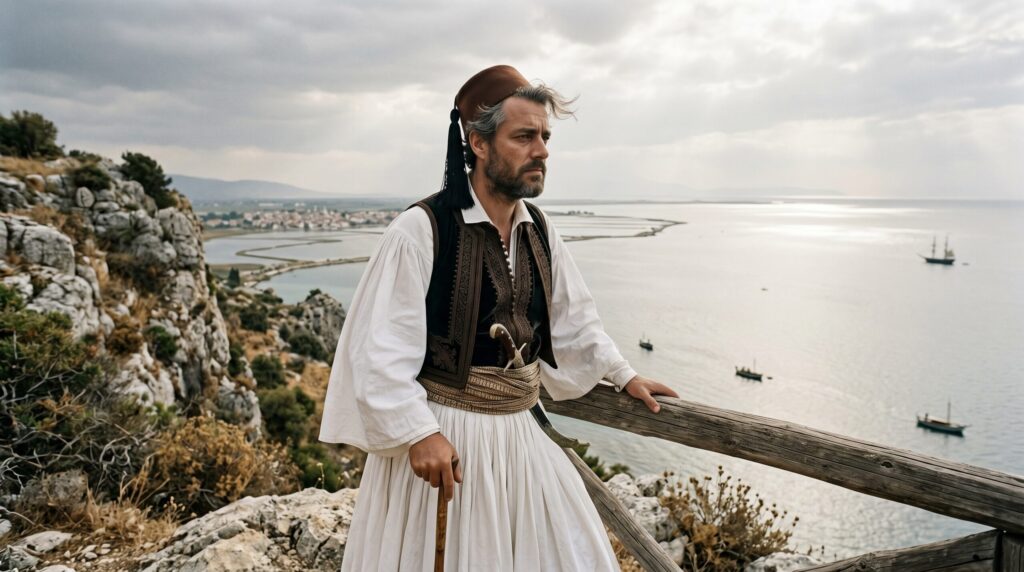
Lord Byron in traditional Greek dress, standing on the rugged cliffs of Missolonghi overlooking the Ionian Sea, looking out with a contemplative expression.

A moody, romanticized depiction of Byron’s study in Greece, filled with manuscripts, ancient artifacts, and a flickering candle.
George Gordon Byron, the famous 6th Baron Byron and leading figure of the Romantic movement, died on April 19, 1824, in Missolonghi, Greece. Byron had traveled to Greece to join the struggle for independence from the Ottoman Empire, using his fame and fortune to support the Greek cause. He died not in battle, but of a fever contracted during the siege. His death was mourned throughout Europe and transformed him into a national hero in Greece. Byron’s legacy as a "Byronic hero"—mysterious, brooding, and rebellious—continues to influence literature and culture centuries later.