![[e]Photo Stream](/logo.png)

April 11
5 moments across history
Apollo 13 Launches for the Moon
On April 11, 1970, NASA launched Apollo 13 from Kennedy Space Center carrying astronauts Jim Lovell, Jack Swigert, and Fred Haise on what was to be the third lunar landing mission. Liftoff went smoothly and the spacecraft headed toward the Moon, with mission controllers and the crew unaware that a small fault in an oxygen tank would lead to a catastrophic explosion two days later. The launch itself captured the world's attention and represented the high-water mark of American ambition in the Space Race — routine enough to be almost overlooked, yet carrying within it one of the most dramatic survival stories in the history of exploration.
Apollo 13 lifting off from Launch Complex 39A at Kennedy Space Center, April 11, 1970
RMS Titanic Departs Queenstown on Her Fateful Voyage
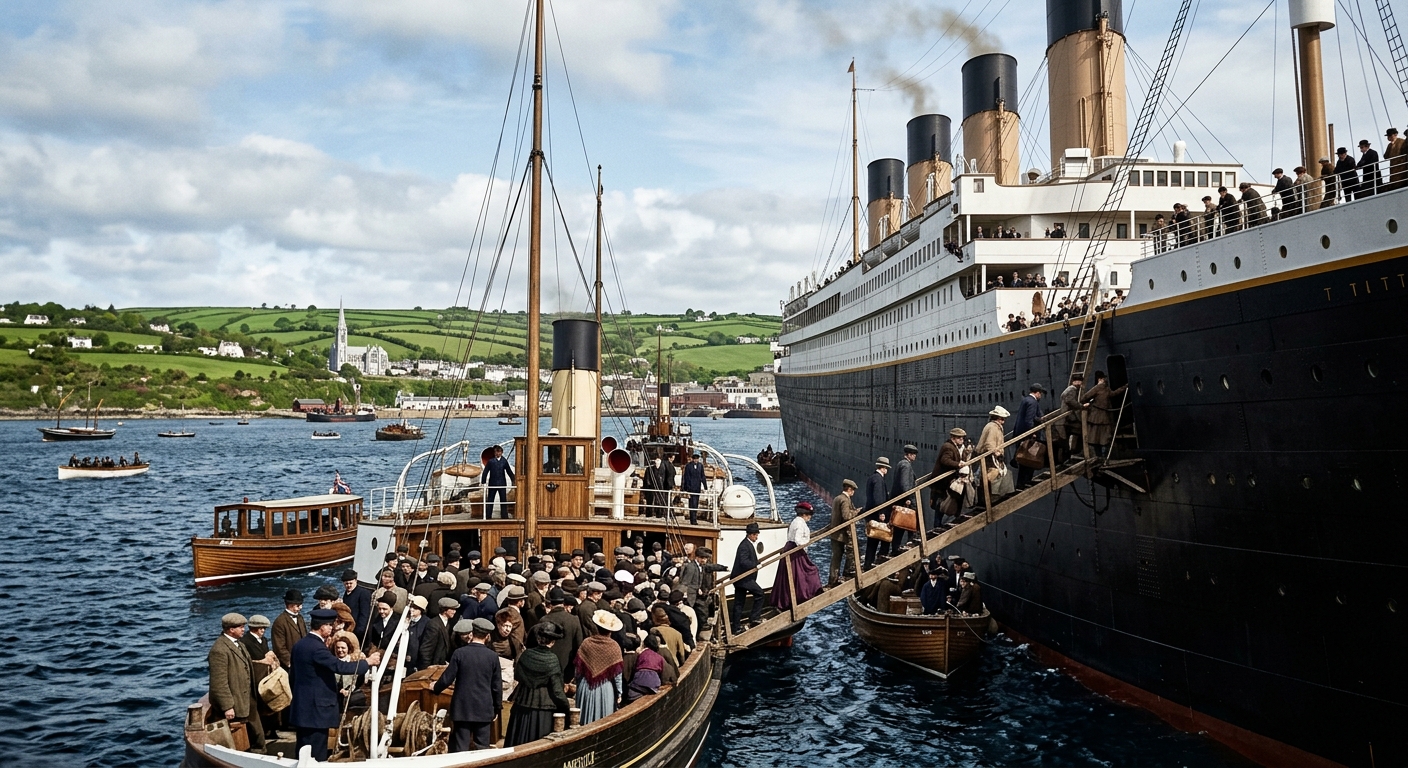
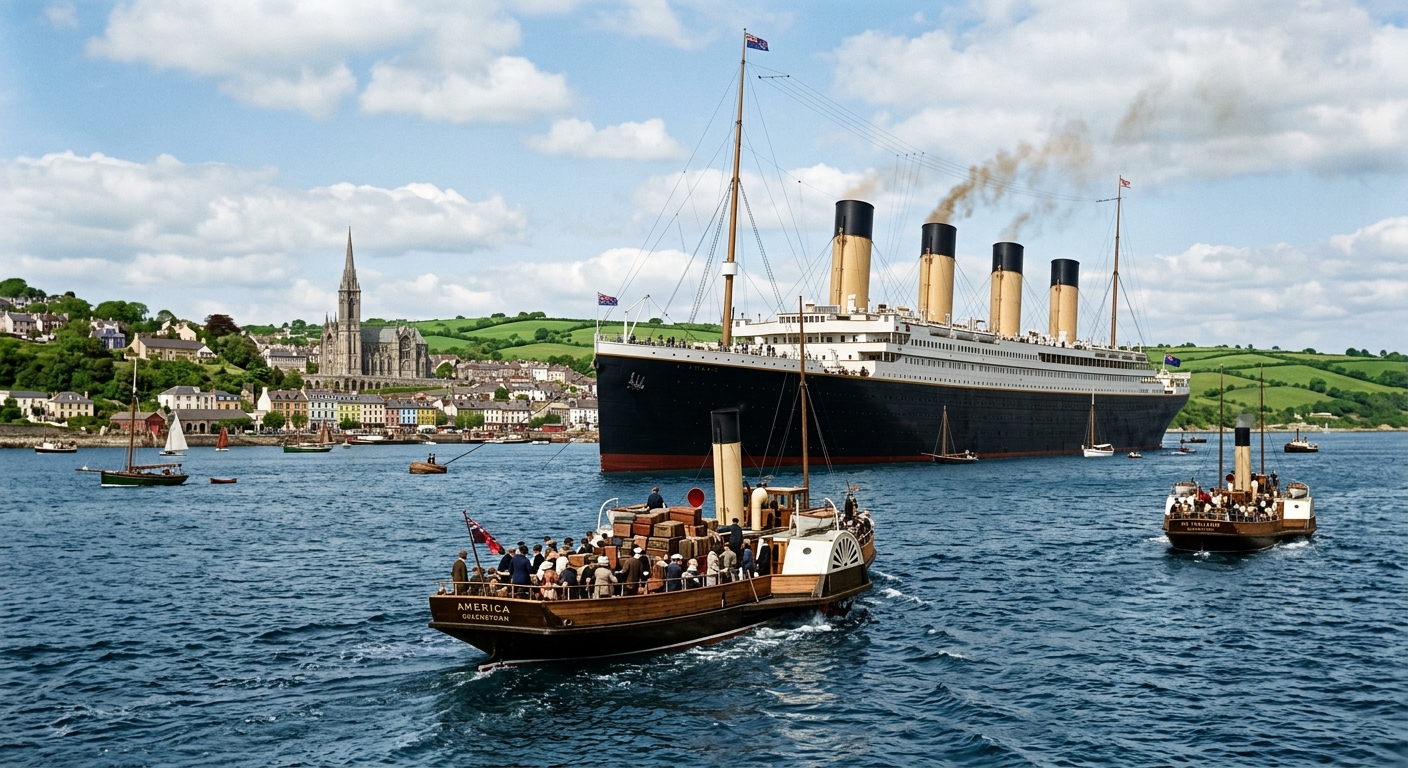
The RMS Titanic anchored off Queenstown, Ireland, on April 11, 1912, taking on her final passengers

Emigrants crowding the lower decks of Titanic as she prepares to depart Queenstown for New York
On April 11, 1912, the RMS Titanic made her final port call at Queenstown (now Cobh), Ireland, picking up 123 passengers before heading west into the Atlantic. It was the last time the ship would touch land, and for many of those who boarded there, it would be their last sight of Europe. The Titanic's brief stop at Queenstown has become one of the most studied moments in maritime history — photographers captured some of the few surviving images of the ship, and emigrants lined the decks for a final look at the home they were leaving behind, not knowing the voyage would end in catastrophe just four days later.
US Forces Liberate Buchenwald Concentration Camp
Survivors at Buchenwald concentration camp on the day of liberation, April 11, 1945
US Army soldiers examining the grounds of Buchenwald shortly after liberating the camp
On April 11, 1945, soldiers of the US Army's 6th Armored Division liberated Buchenwald concentration camp near Weimar, Germany, one of the largest Nazi camps on German soil. They found approximately 21,000 survivors in horrific condition, along with evidence of the systematic murder of more than 56,000 prisoners over the camp's eight years of operation. The liberation shocked Allied commanders and journalists who accompanied the troops — General Eisenhower ordered his men to document everything they found, insisting the world would need undeniable proof. Buchenwald's liberation became one of the defining moral moments of World War II.
President Johnson Signs the Fair Housing Act
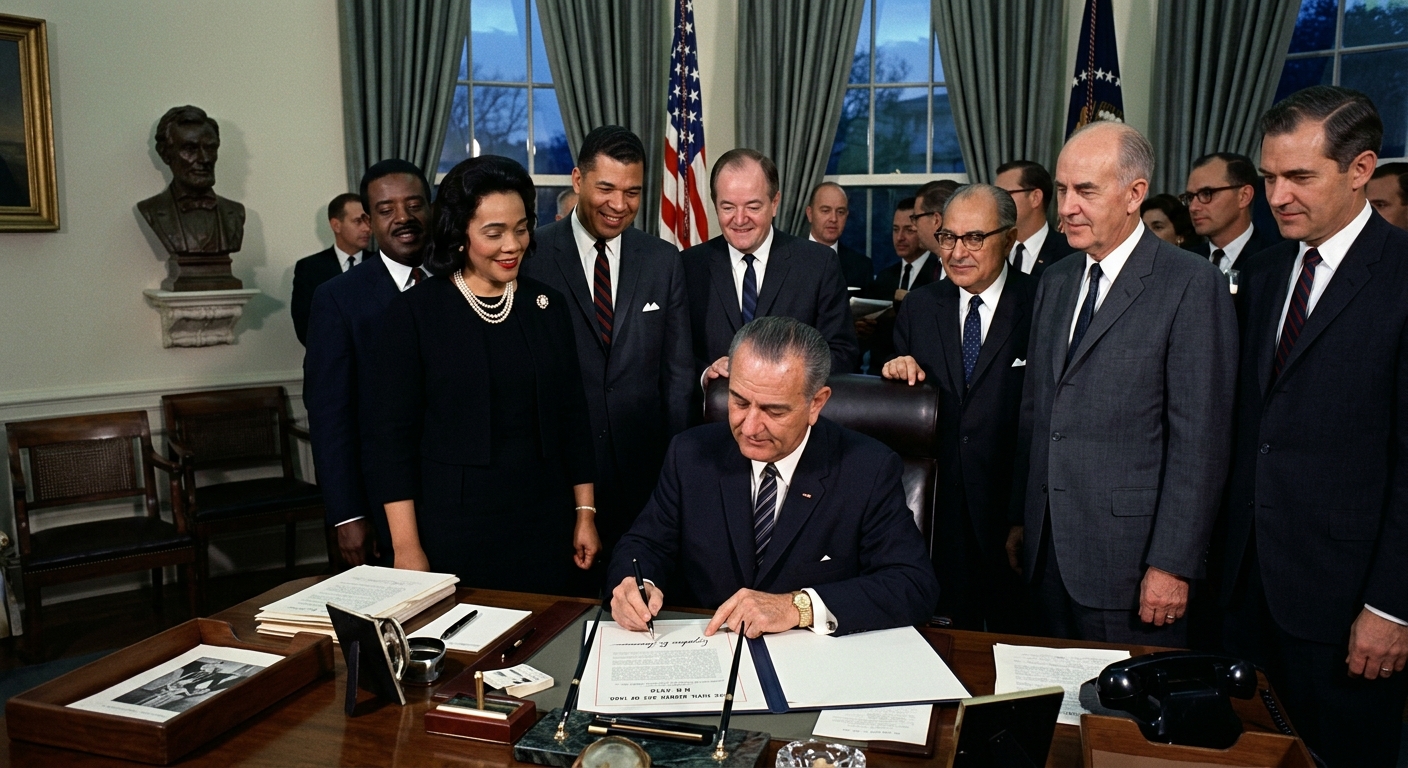
President Lyndon B. Johnson signing the Fair Housing Act in the White House, April 11, 1968
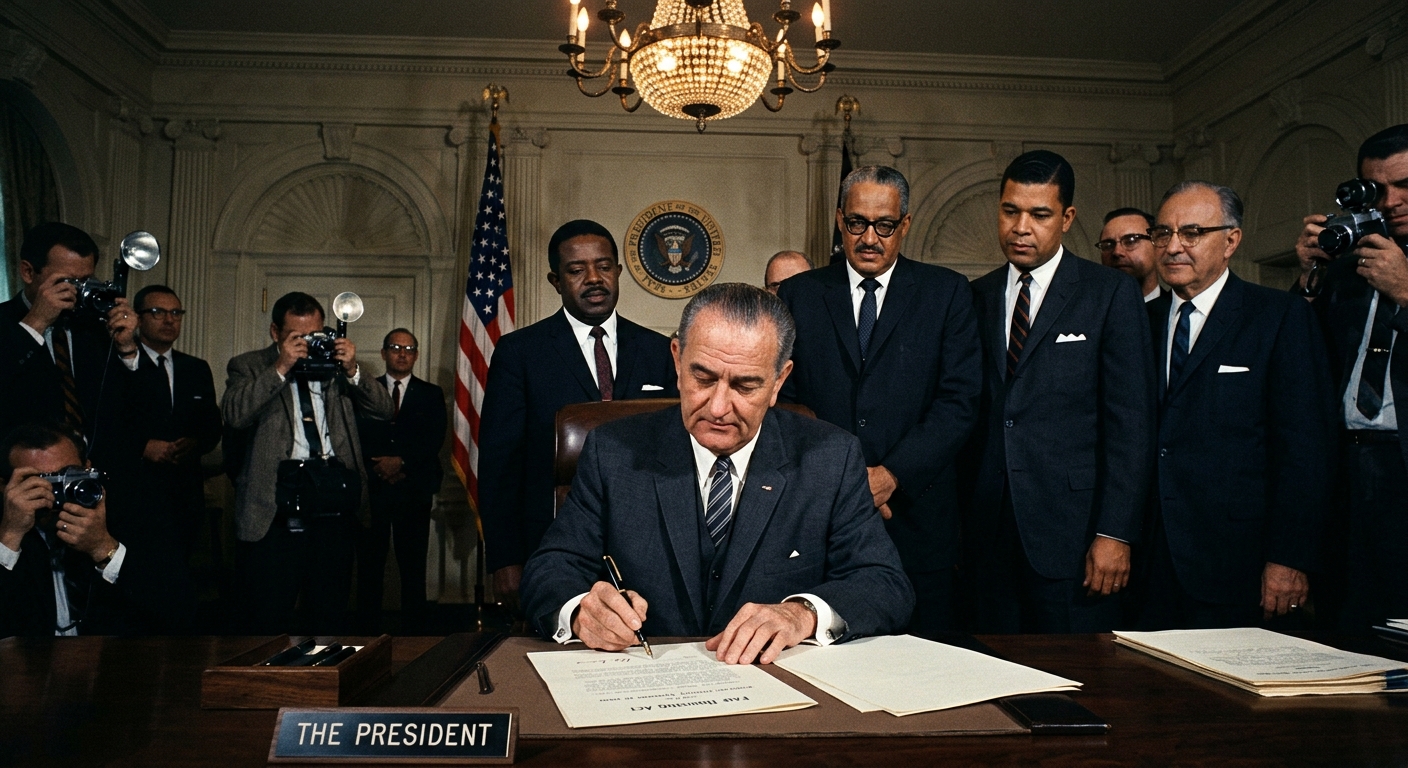
Civil rights leaders and lawmakers gathered at the signing ceremony for the Fair Housing Act
On April 11, 1968, President Lyndon B. Johnson signed the Civil Rights Act of 1968, also known as the Fair Housing Act, into law. The legislation prohibited discrimination in the sale, rental, and financing of housing based on race, religion, national origin, and sex. Its passage came just one week after the assassination of Martin Luther King Jr., whose death created political momentum for a bill that had stalled in Congress. The Fair Housing Act was the last major piece of legislation from the civil rights era, completing a framework of formal legal equality that had been built over the previous decade.
Jackie Robinson Joins the Brooklyn Dodgers

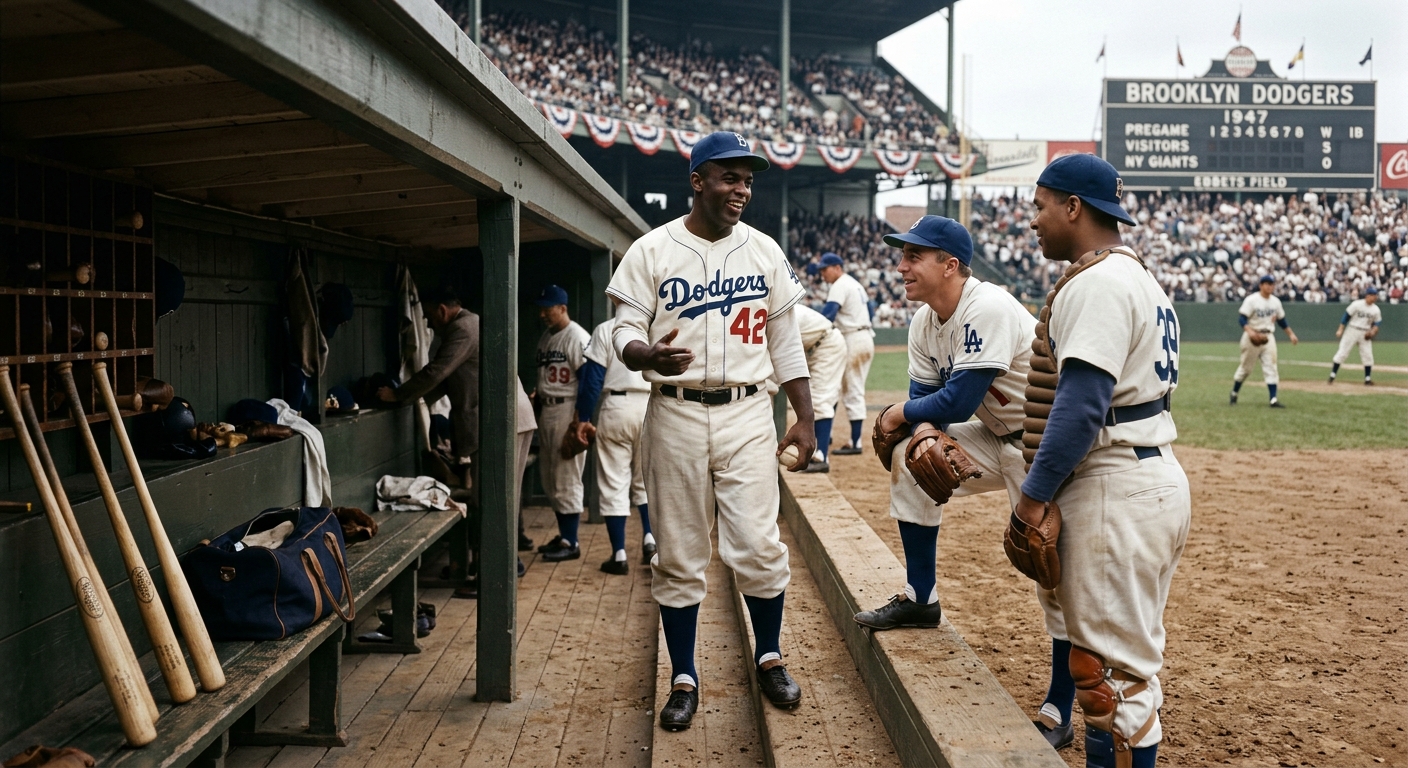
Jackie Robinson in his Brooklyn Dodgers uniform in 1947, the year he broke baseball's color barrier
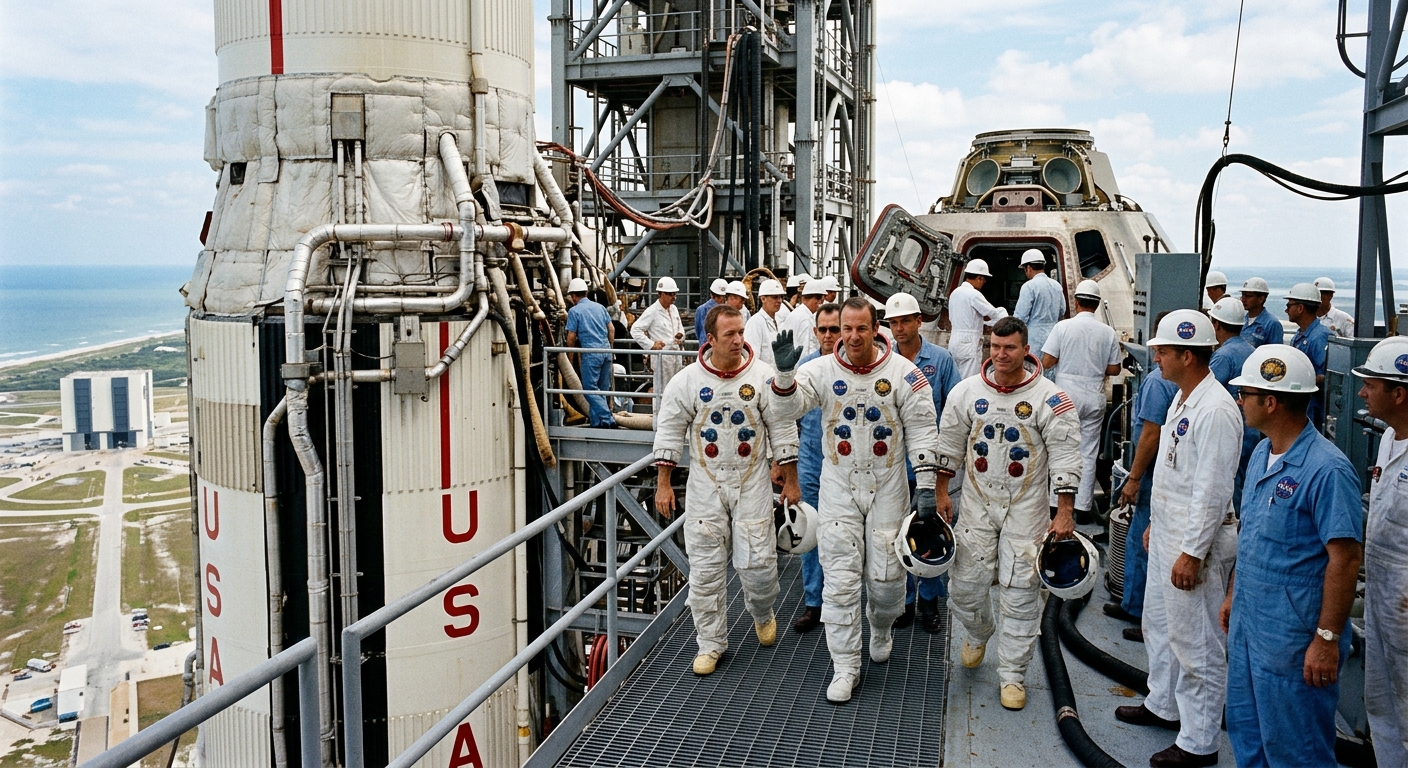
Ebbets Field in Brooklyn, where Jackie Robinson made history as the first Black player in modern Major League Baseball
On April 10–11, 1947, Branch Rickey announced that Jackie Robinson had been purchased from the Montreal Royals and would join the Brooklyn Dodgers, ending professional baseball's decades-long color barrier. Robinson would play his first major league game on April 15, 1947, becoming the first Black player in MLB in the modern era. The days surrounding his arrival in Brooklyn were charged with enormous pressure — some teammates had circulated a petition against his inclusion, opposing teams made threats, and much of the country watched to see whether integration could succeed. Robinson's composure and brilliance on the field proved it could, forever changing American sports.