![[e]Photo Stream](/logo.png)

April 5
5 moments across history
Helen Keller Learns the Meaning of "Water"
On April 5, 1887, in Tuscumbia, Alabama, a seven-year-old Helen Keller stood at an outdoor water pump as her teacher Anne Sullivan held her hand beneath the flowing water and spelled W-A-T-E-R into her palm using the manual alphabet. In that single moment, Keller made the connection between the tactile sensation and the concept of language — understanding for the first time that things had names. It was the breakthrough that unlocked the world for a girl who had been deaf and blind since infancy. From that day forward, Keller would go on to learn hundreds of words, eventually becoming a celebrated author, activist, and symbol of the boundless human capacity to overcome.
Helen Keller at the water pump where everything changed — the moment a touch became language.
Winston Churchill Resigns as Prime Minister
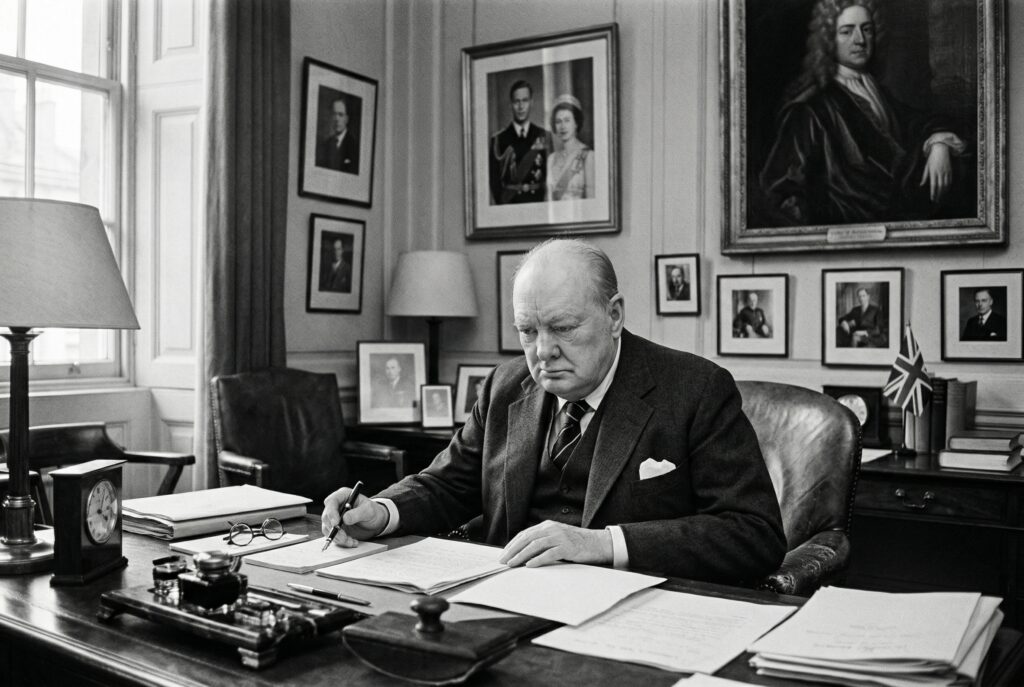
Winston Churchill at his Downing Street desk — an aging titan whose wartime leadership defined an era.
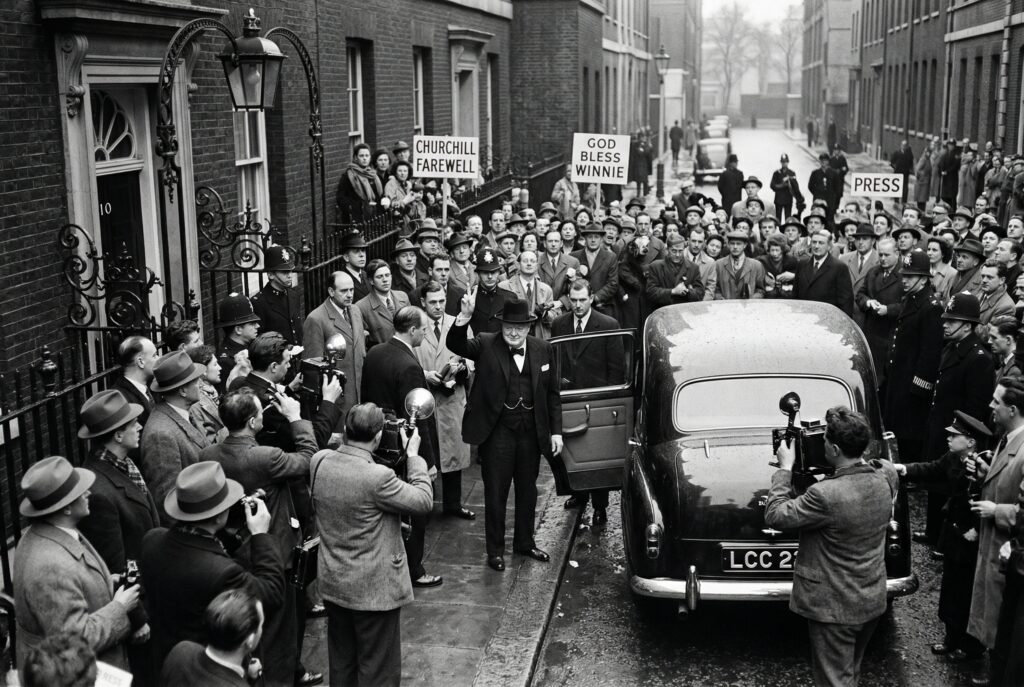
London crowds outside 10 Downing Street mark the end of Churchill's final tenure as Prime Minister.
On April 5, 1955, Winston Churchill resigned as Prime Minister of the United Kingdom at the age of 80, ending one of the most remarkable political careers in modern history. Churchill had led Britain through its darkest hours in World War II with a combination of defiant oratory, strategic vision, and sheer force of will. After losing the 1945 election, he returned to power in 1951, but by 1955 his health had significantly declined, and his colleagues quietly urged him to step aside. He handed power to Anthony Eden and left Downing Street for the last time as leader — a lion in winter, whose legacy would only grow with the passing years.
Gandhi Reaches the Sea — The Salt March Climax
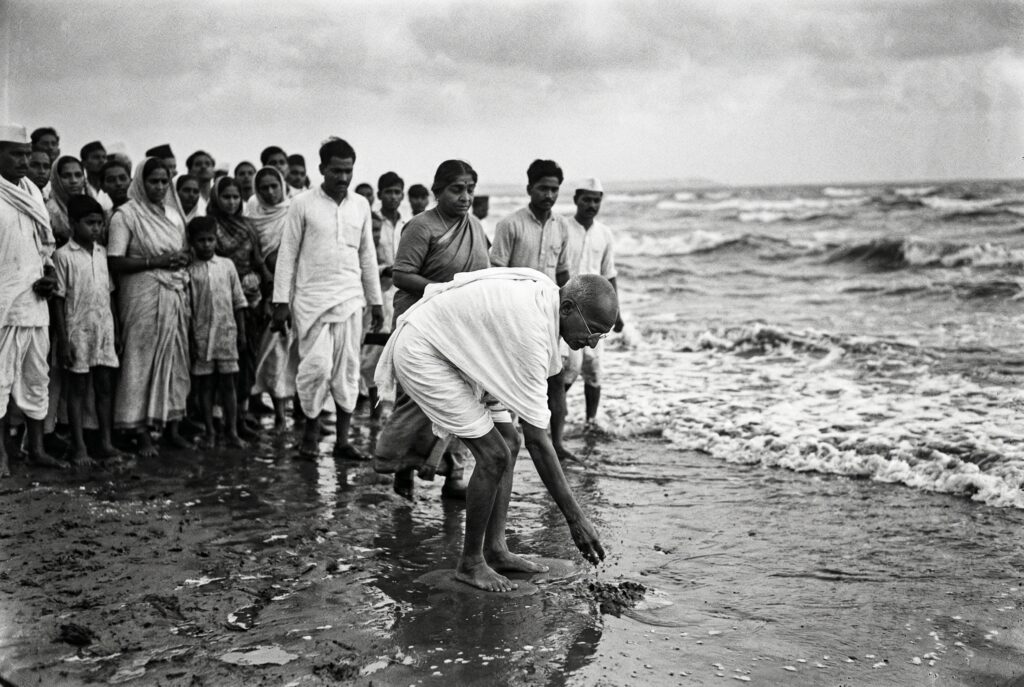
Gandhi bends to the earth at Dandi, lifting salt and lifting a nation's defiance with it.
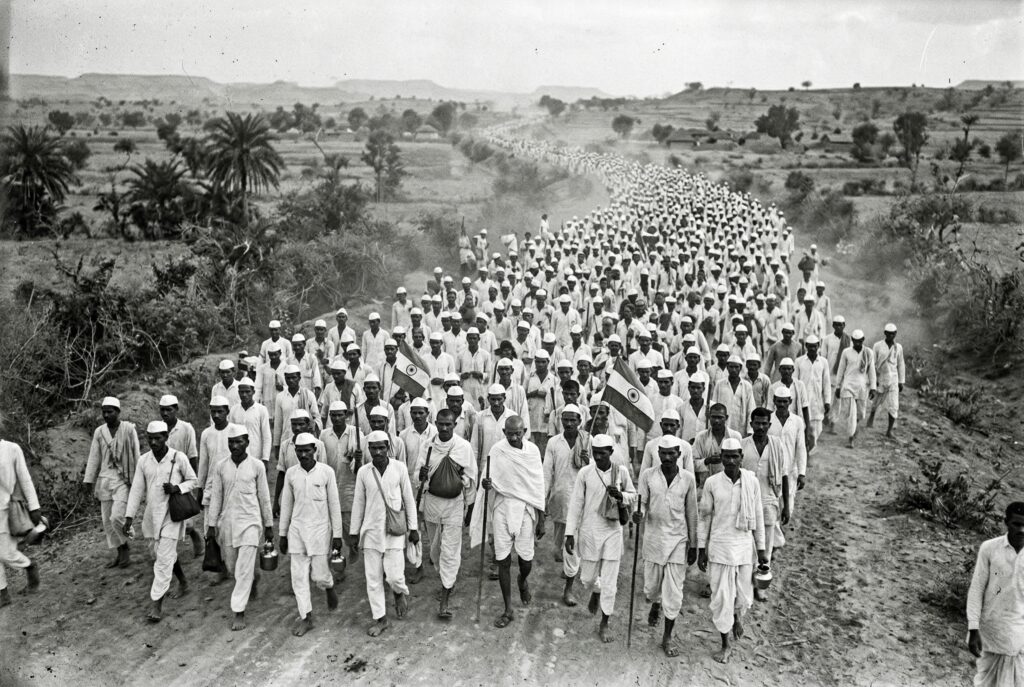
Thousands of marchers stretching across the Gujarat plain — a walking protest that shook an empire.
On April 5, 1930, Mahatma Gandhi arrived at the coastal village of Dandi on the Arabian Sea after a 24-day, 240-mile march across Gujarat, India. The following morning, he knelt down and scooped a handful of natural salt from the shore, openly defying the British Salt Act that criminalized Indians from collecting or selling salt without paying a British tax. The act of picking up a pinch of salt ignited a nationwide civil disobedience movement. Tens of thousands across India began making their own salt in symbolic solidarity. The Salt March became one of the most powerful acts of nonviolent resistance in history and a turning point in India's independence movement.
TIROS-1 — The World's First Weather Satellite Launched
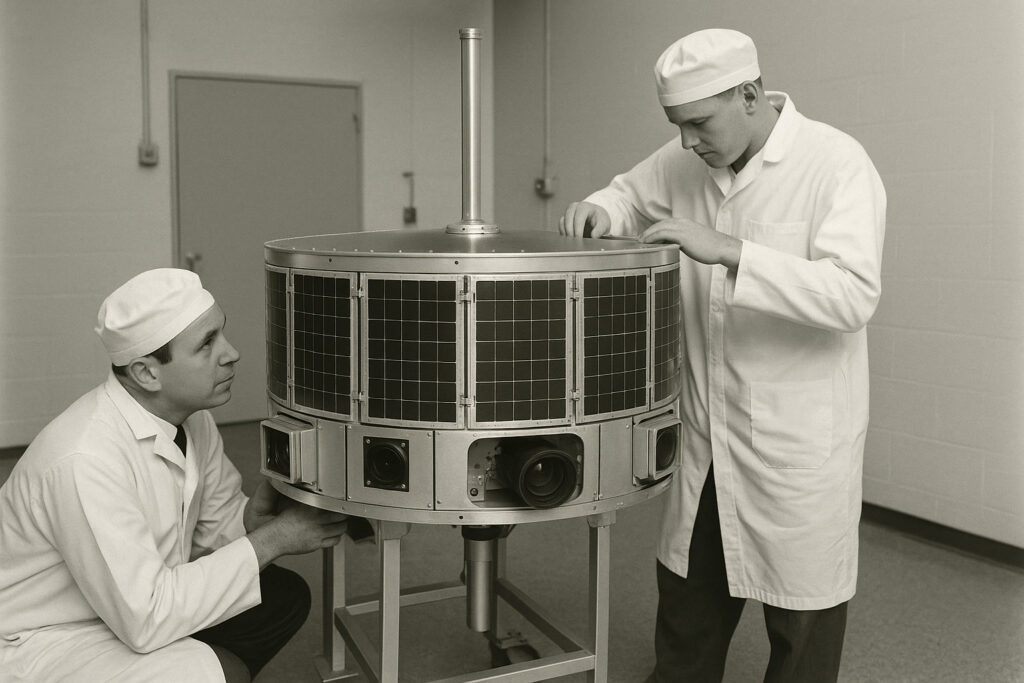
TIROS-1 assembled in the clean room — a drum of aluminum and ambition pointed at the sky.
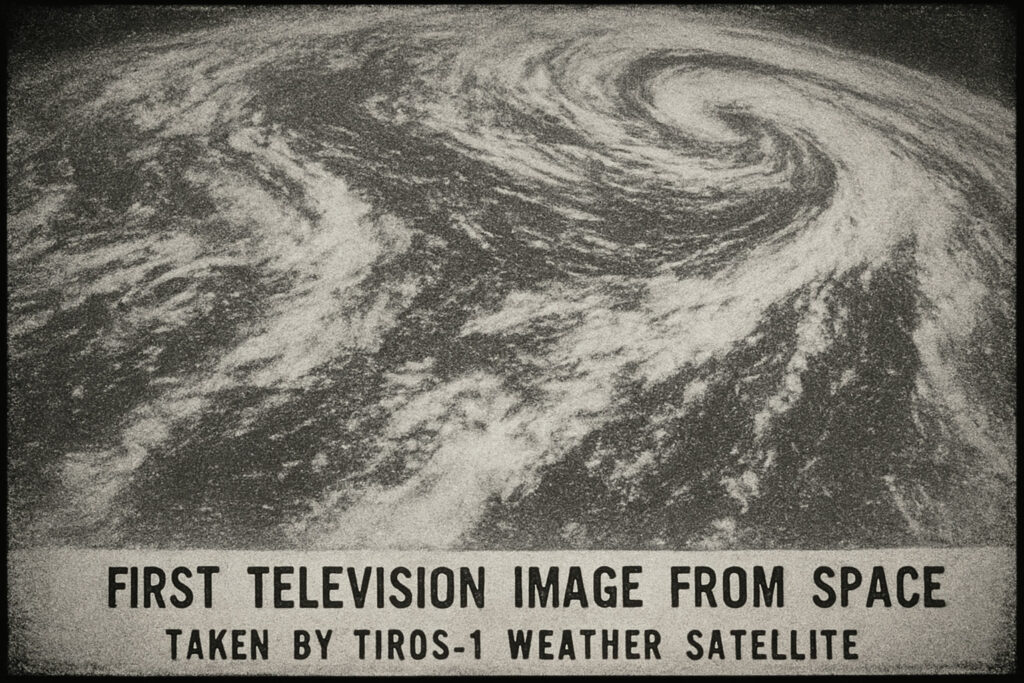
The first images of Earth's cloud cover from orbit: grainy, historic, and utterly transformative.
On April 1, 1960, NASA launched TIROS-1 (Television Infrared Observation Satellite) from Cape Canaveral — the world's first successful weather satellite. Within days it was transmitting grainy but revolutionary television images of Earth's cloud cover from orbit, fundamentally transforming meteorology. For the first time, scientists could see weather systems forming from above rather than inferring them from ground readings. TIROS-1 validated the concept of weather satellites entirely, and within a decade, a continuous network of weather satellites would be watching the planet around the clock — the foundation of modern forecasting, storm tracking, and climate observation.
George Washington Exercises the First Presidential Veto
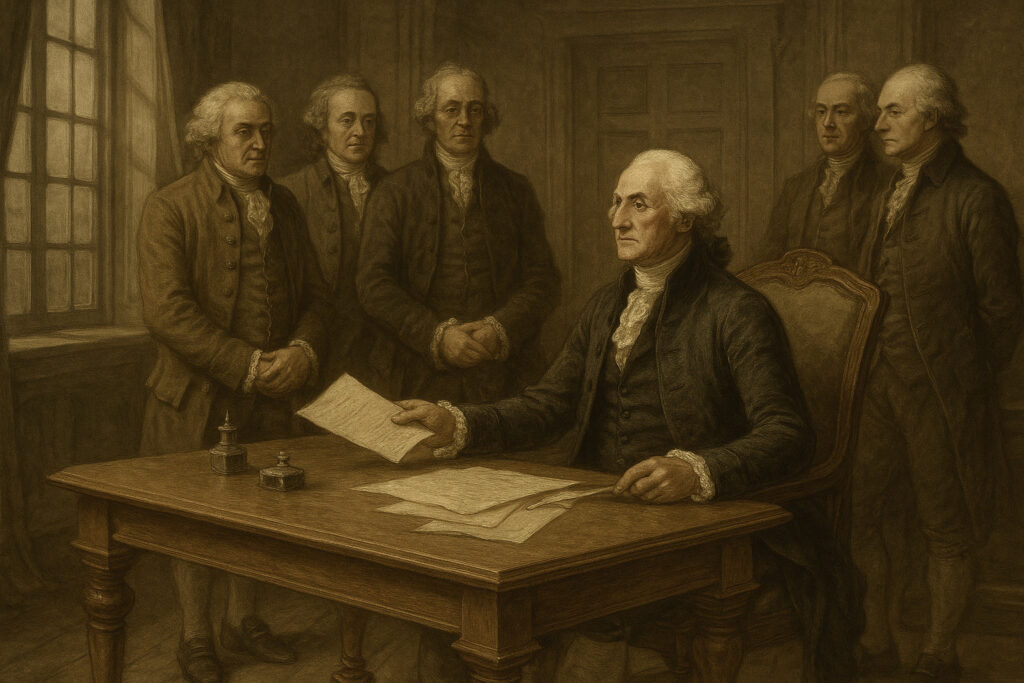
Washington at his Philadelphia desk — the first veto in American history, a precedent carved in parchment.
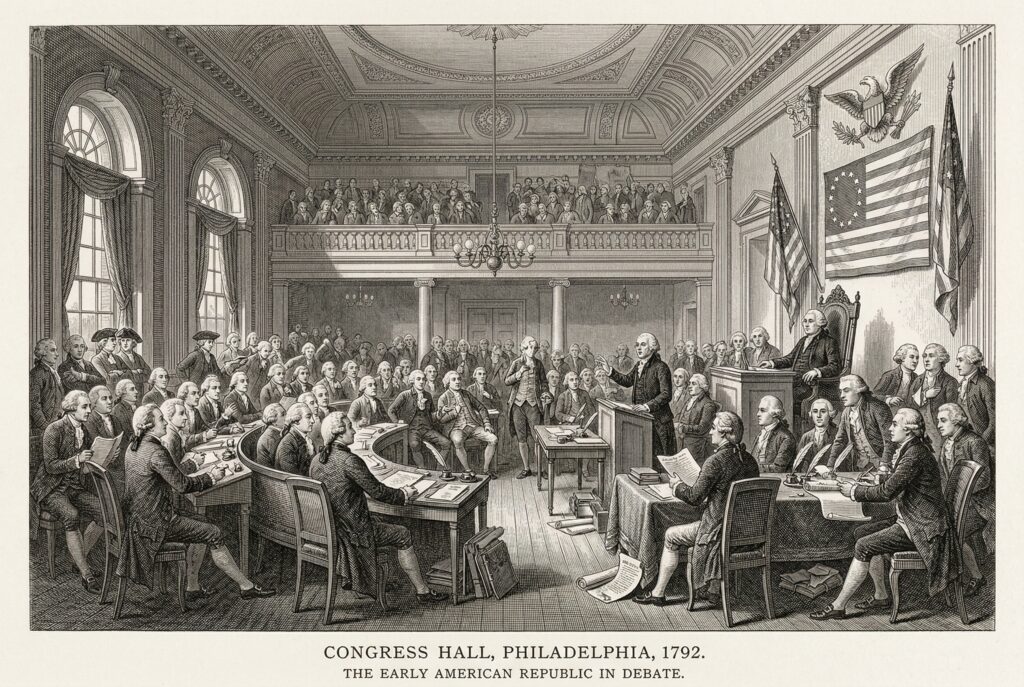
Congress Hall, Philadelphia, 1792 — the chamber where the young republic tested its constitutional limits.
On April 5, 1792, President George Washington used the presidential veto for the first time in American history, rejecting a congressional bill that would have reapportioned seats in the House of Representatives. Washington's Secretary of State Thomas Jefferson and Attorney General Edmund Randolph had advised that the formula used was unconstitutional, giving some states more representatives than the Constitution allowed per population ratio. Washington's willingness to reject legislation — establishing the veto as a real check on congressional power, not merely a theoretical one — set a foundational precedent for the separation of powers that has governed American democracy ever since.